

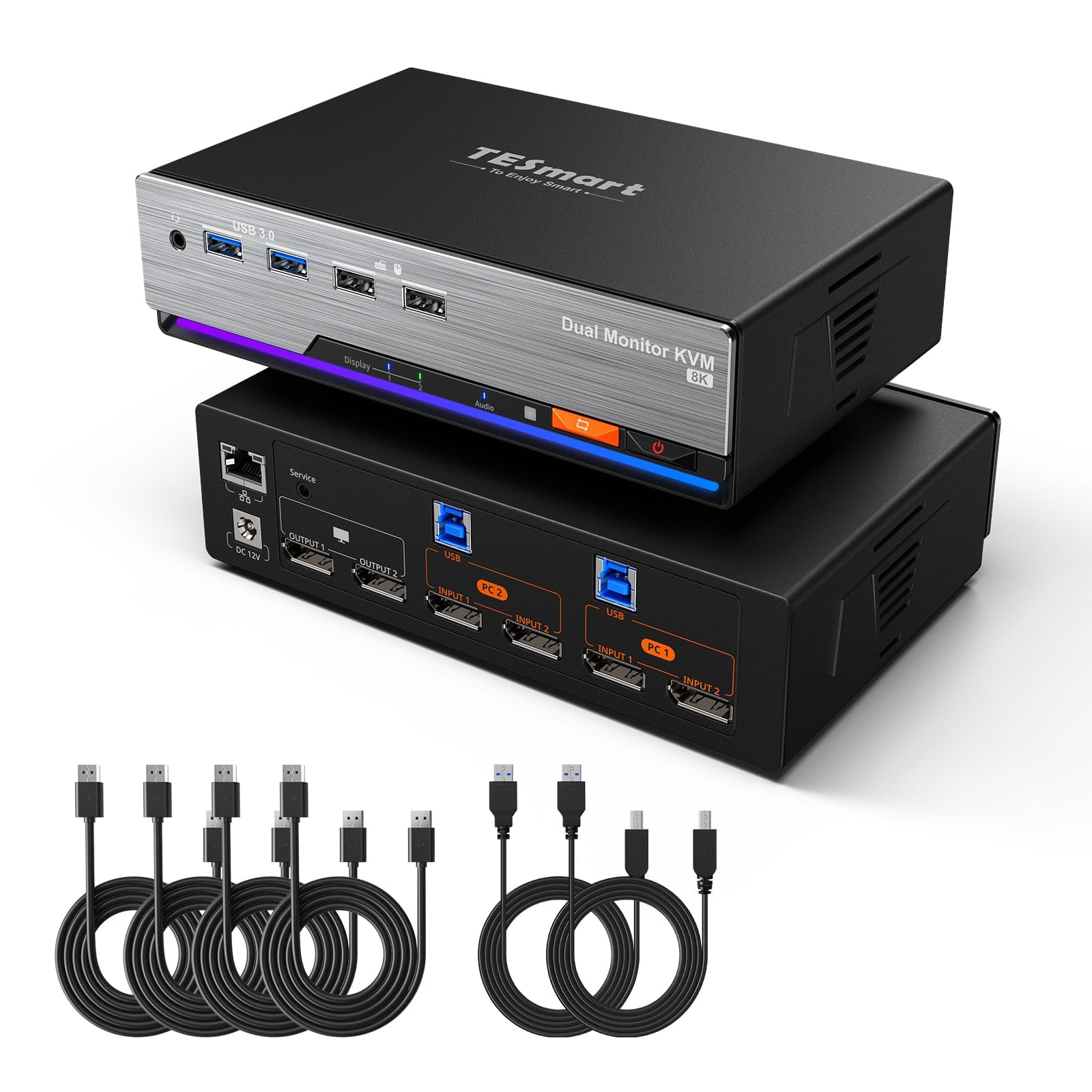


2×2 DP 1.4 KVM for 2 PCs | Dual 8K60/4K144, EDID & G-Sync
Share two DisplayPort 1.4 monitors between two PCs at up to dual 8K@60Hz or 4K@144Hz, with EDID emulation that keeps every desktop exactly where you left it after switching.
2×2 DP 1.4 KVM for 2 PCs | Dual 8K60/4K144, EDID & G-Sync
Why Choose DKS202-M24
Overview
01
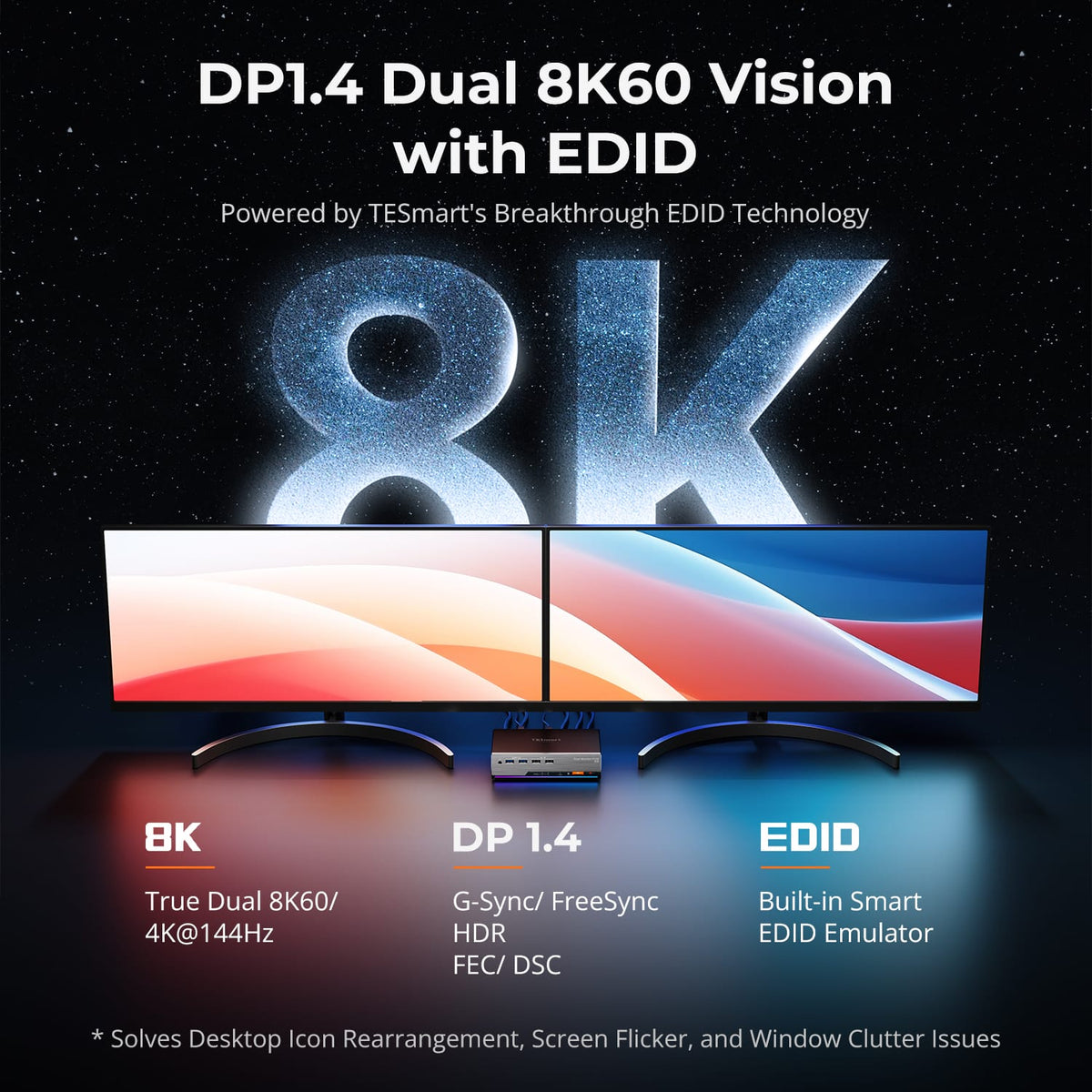
Dual 8K60 Displays over DisplayPort 1.4
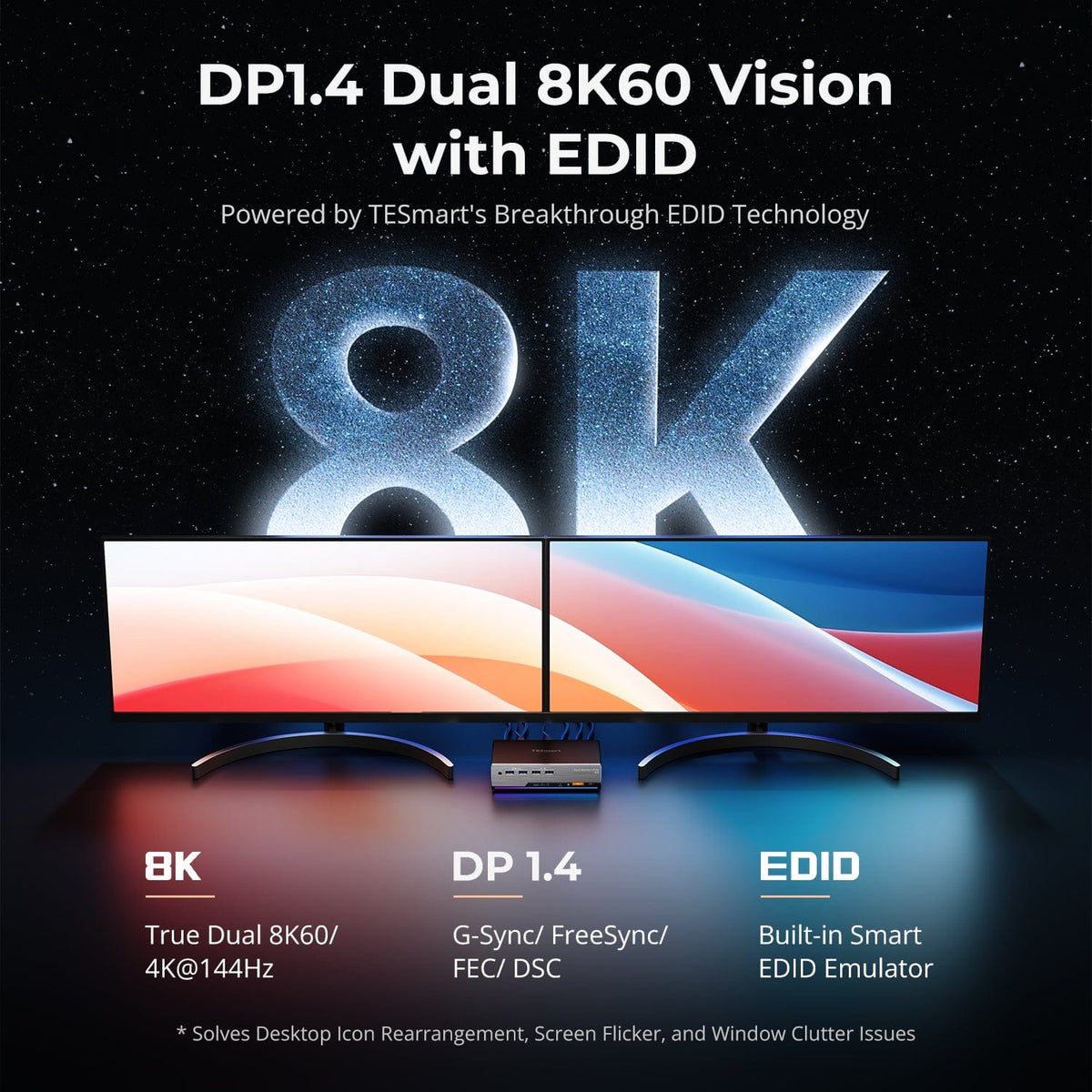
Powered by TESmart EDID emulation, the DKS202-M24 eliminates icon rearrangement, screen flicker, and window clutter. Enjoy G-Sync/FreeSync, FEC and DSC for stable 4K@144Hz visuals. Built-in smart EDID keeps settings consistent—every switch.
02
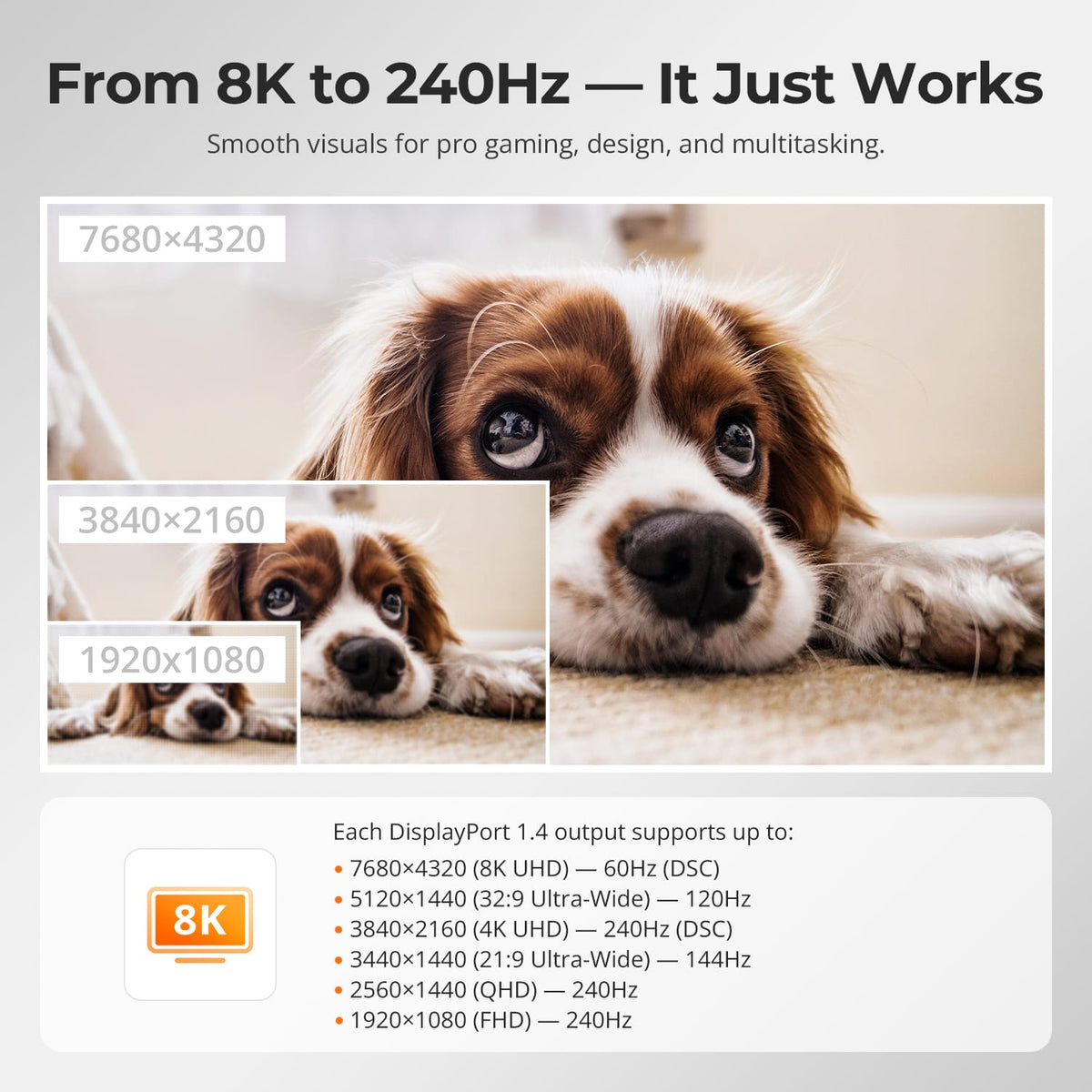
DP 1.4 Full Resolution Coverage — 8K60 to 240Hz(DSC)
Each DisplayPort 1.4 output delivers up to 8K@60Hz for precision design, or high-refresh modes up to 4K@144Hz and 1080P@240Hz for pro gaming and multitasking.
03
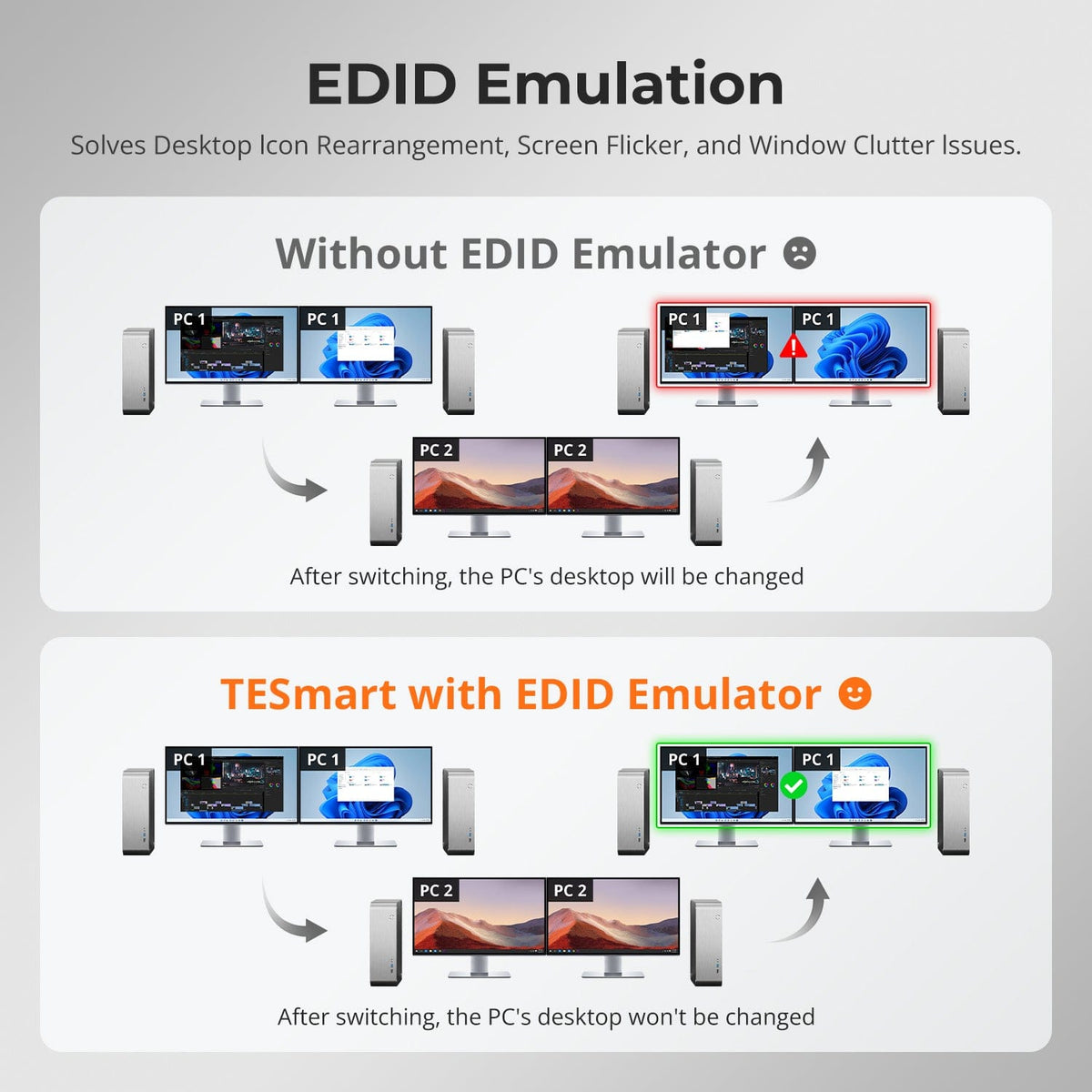
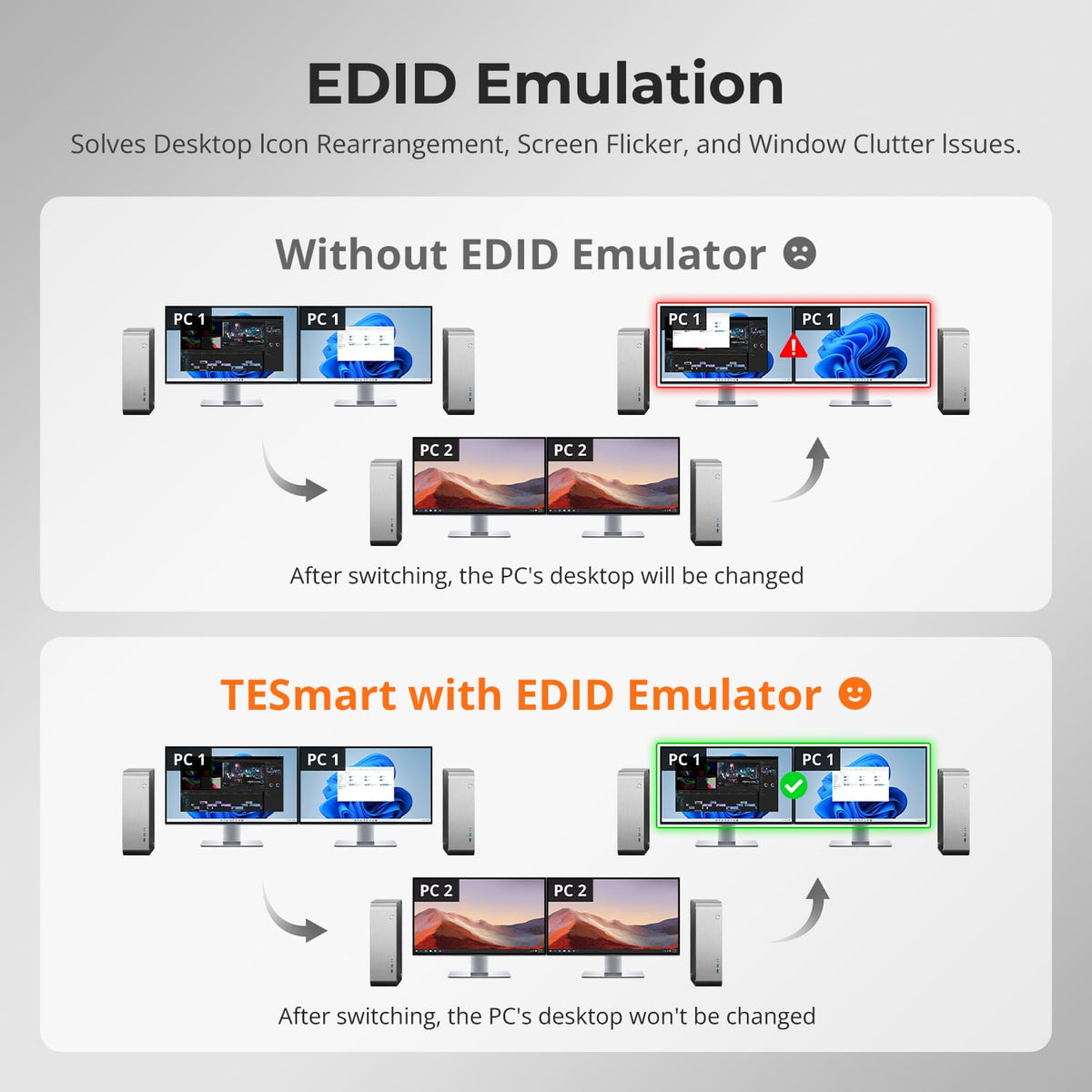
TESmart-Developed DP 1.4 EDID for Stable Switching
TESmart’s self-developed DP 1.4 EDID emulation keeps display settings locked during switching, preventing resolution changes, icon rearrangement, flicker and unnecessary re-detection. It brings stable EDID control to high-bandwidth dual-display workflows.
04
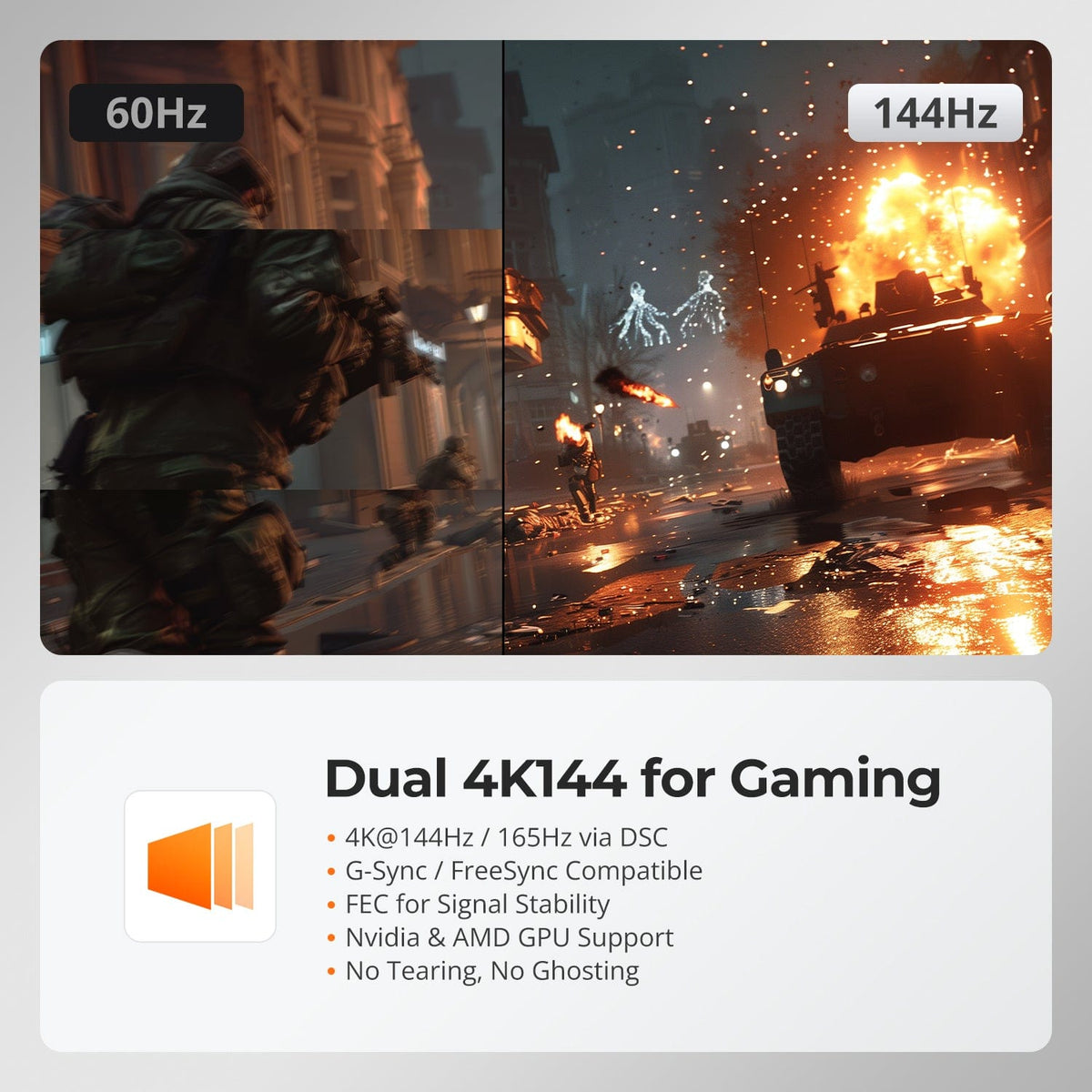
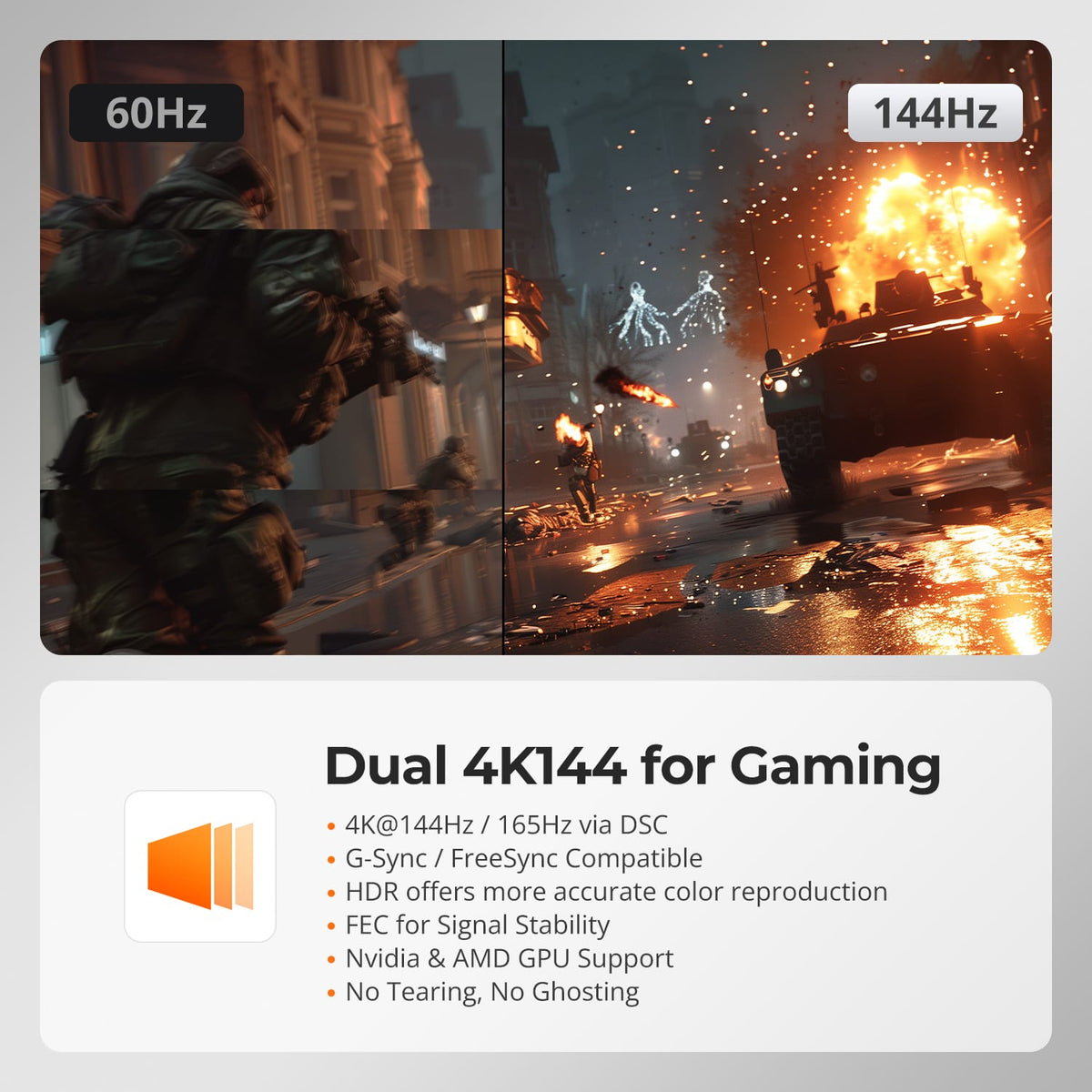
Dual 4K@144Hz Gaming Performance
Experience tear-free, high-refresh gameplay with full G-Sync and FreeSync compatibility. DSC technology ensures stable 4K@144Hz/165Hz output across both displays for competitive gaming.
05
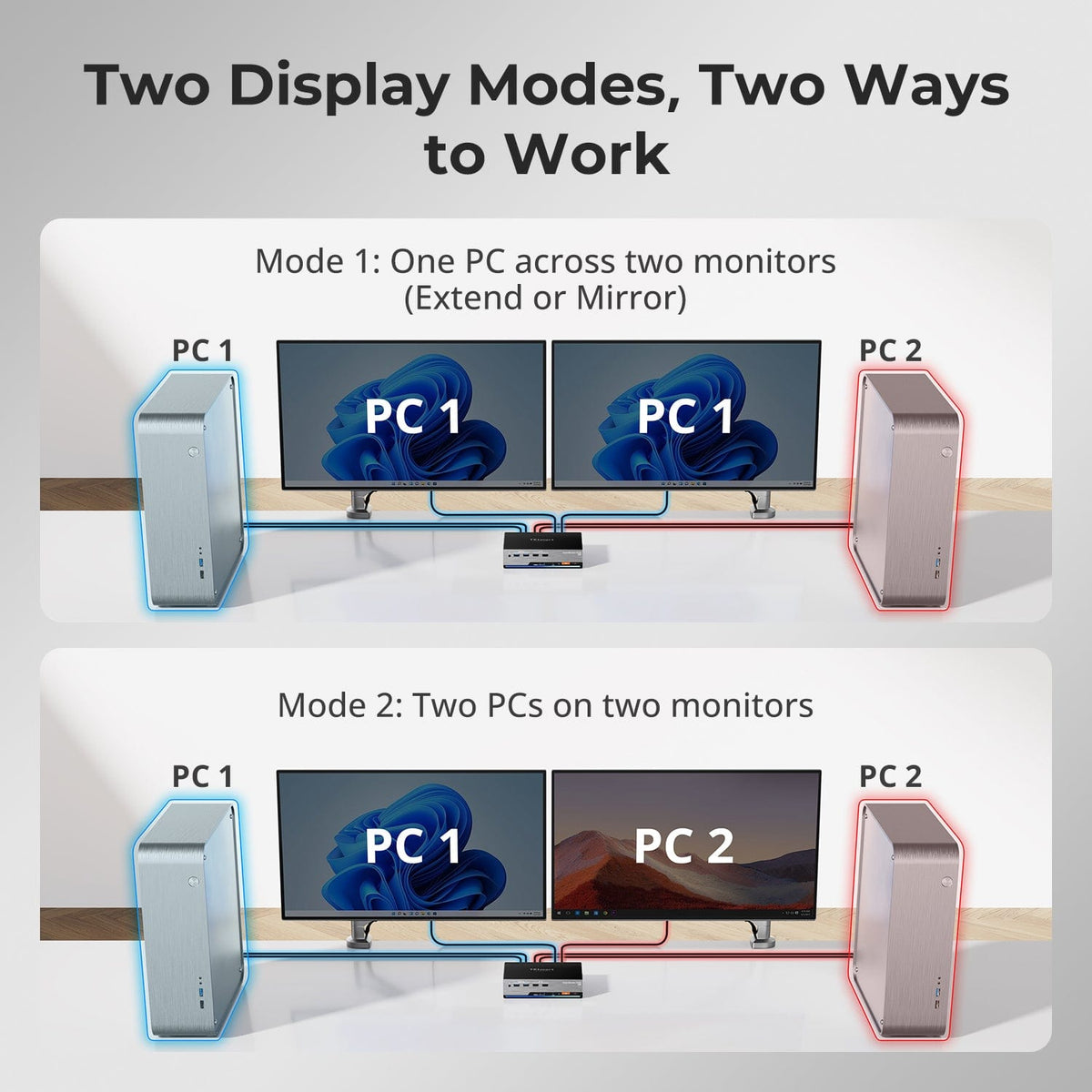
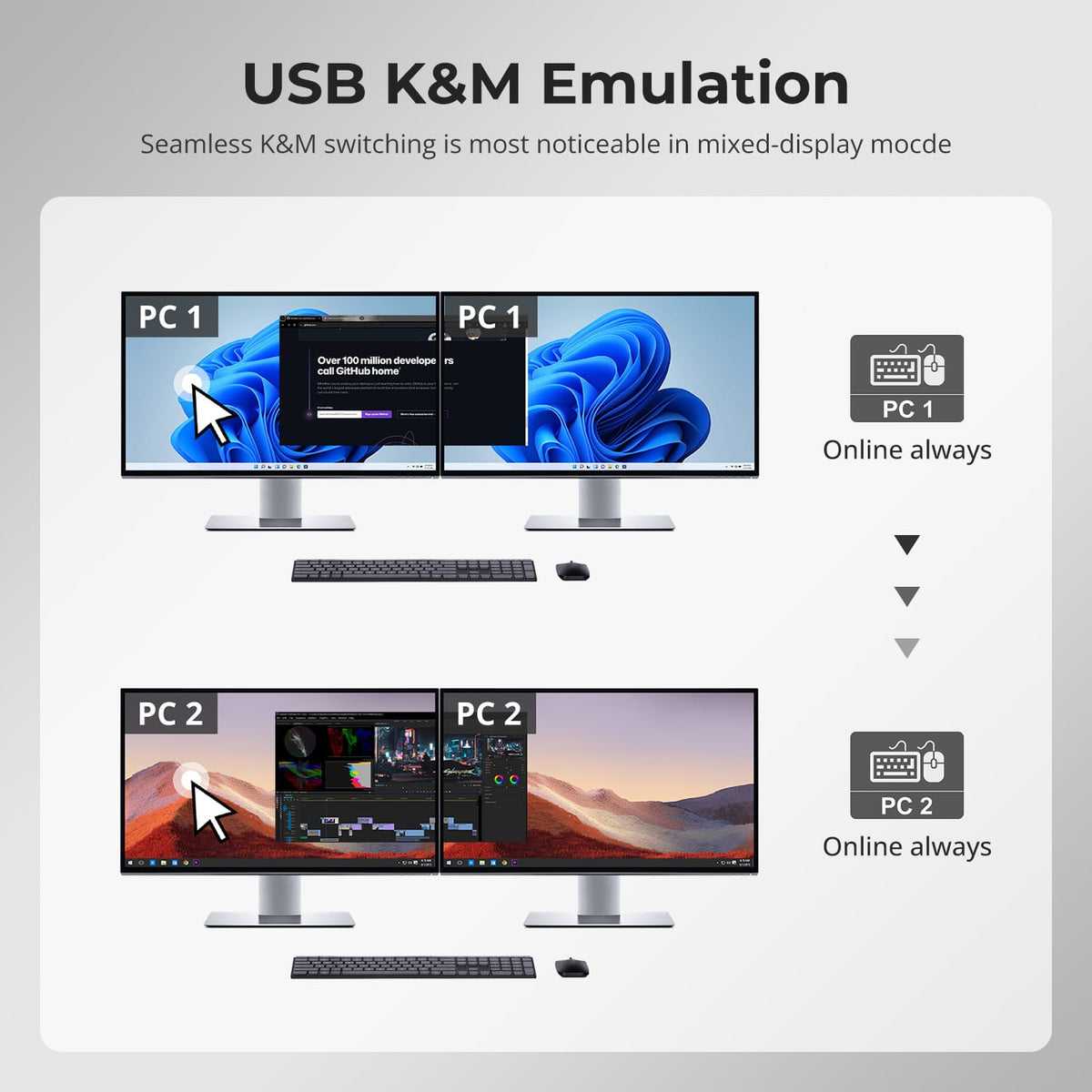
Two Display Modes. One Keyboard & Mouse.
Use both displays with one computer, or assign one display to each computer—and switch keyboard and mouse control between the two systems when working side by side.
06
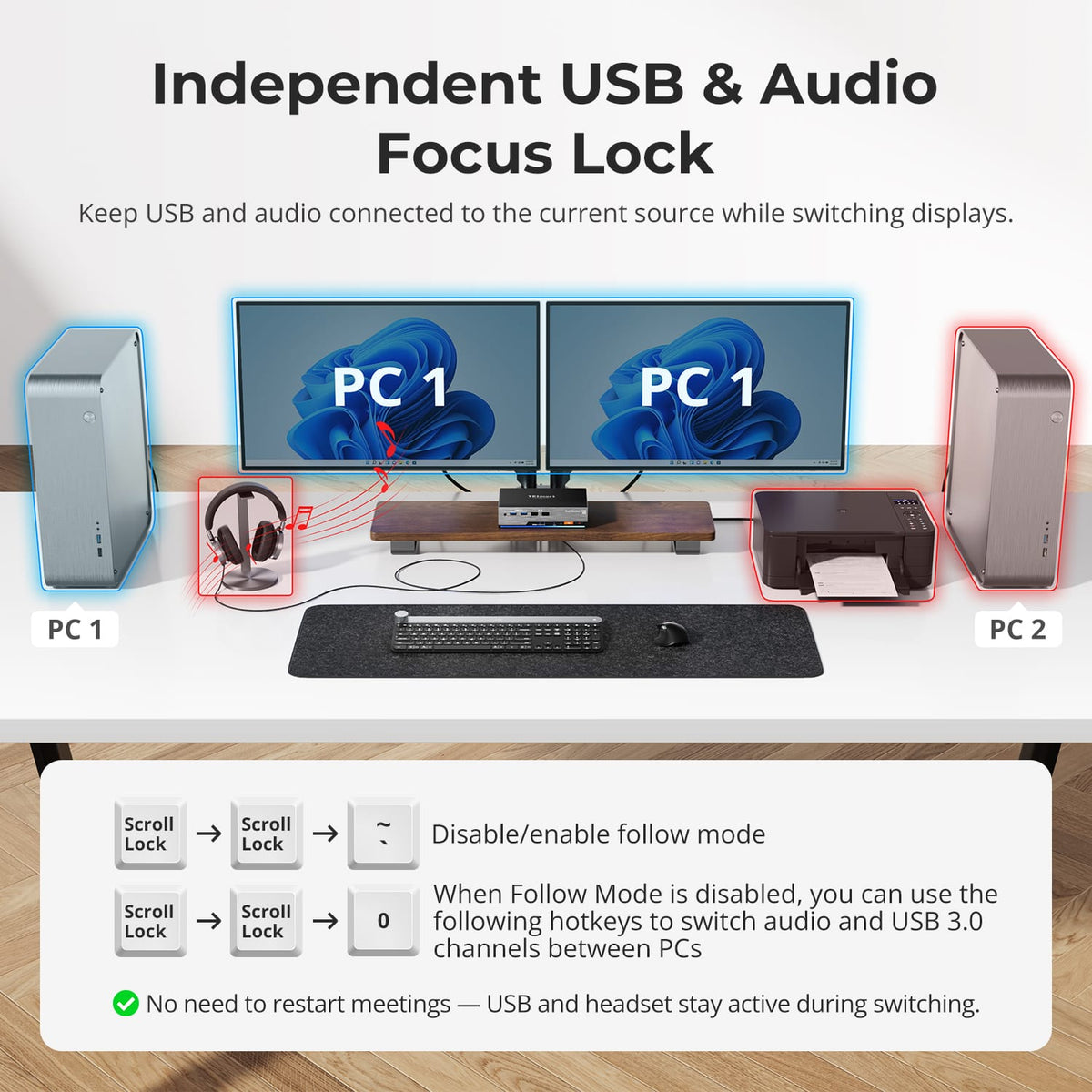
Independent USB & Audio Focus Lock
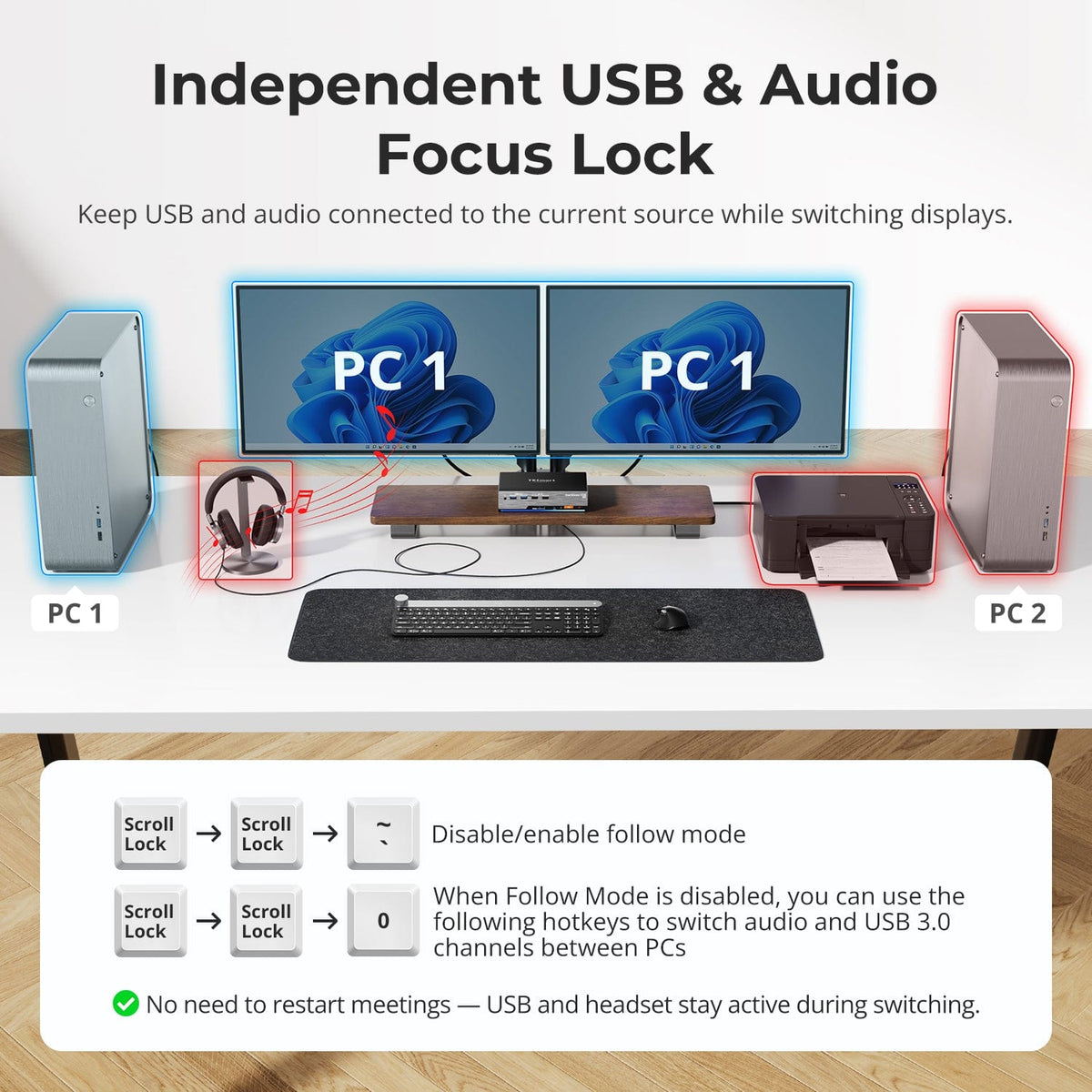
USB and audio can stay locked to the current source while switching displays. Toggle follow mode via hotkey—when disabled, switch USB and audio independently. No meeting dropouts, no reconnecting—seamless workflow.
07
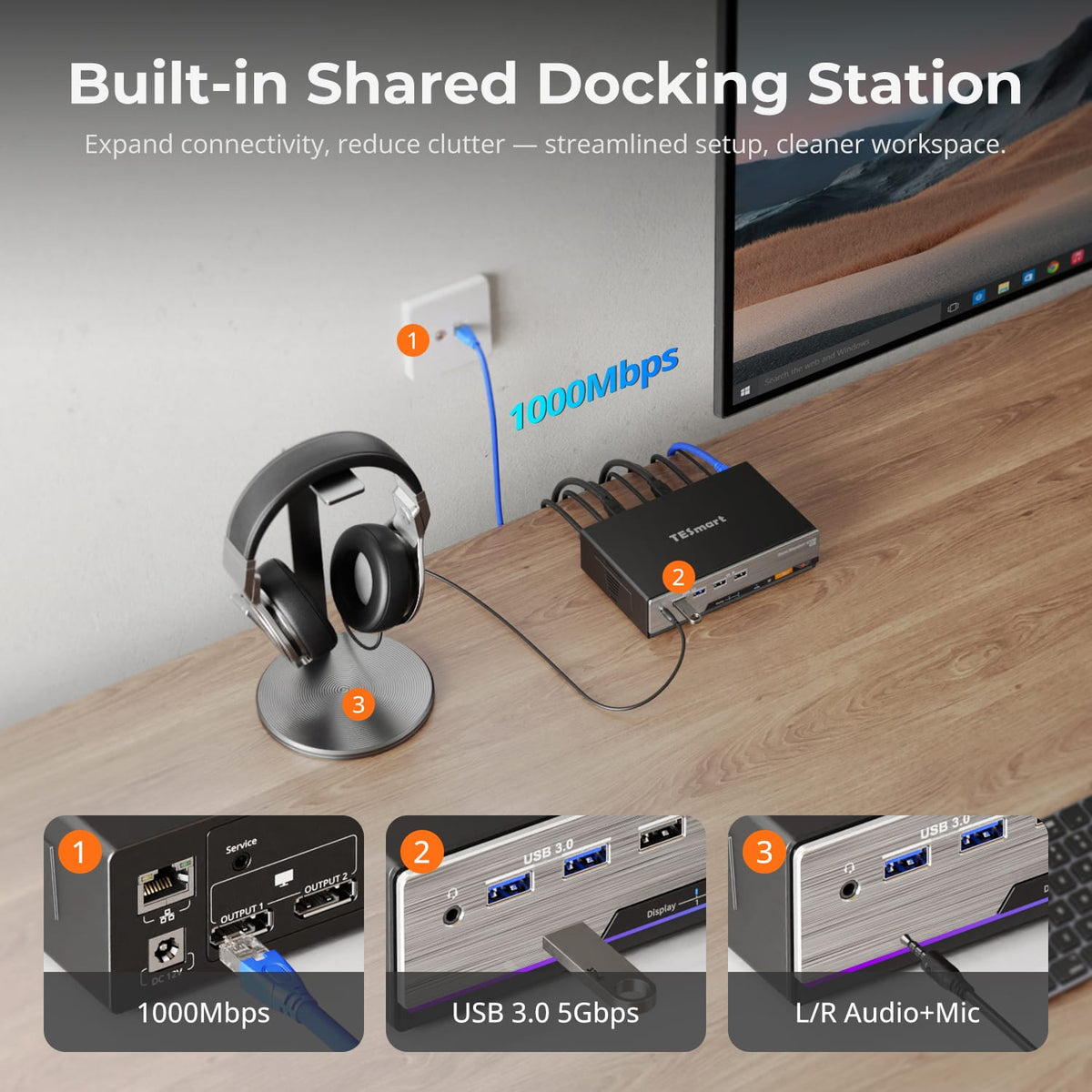
All-in-One Shared Docking
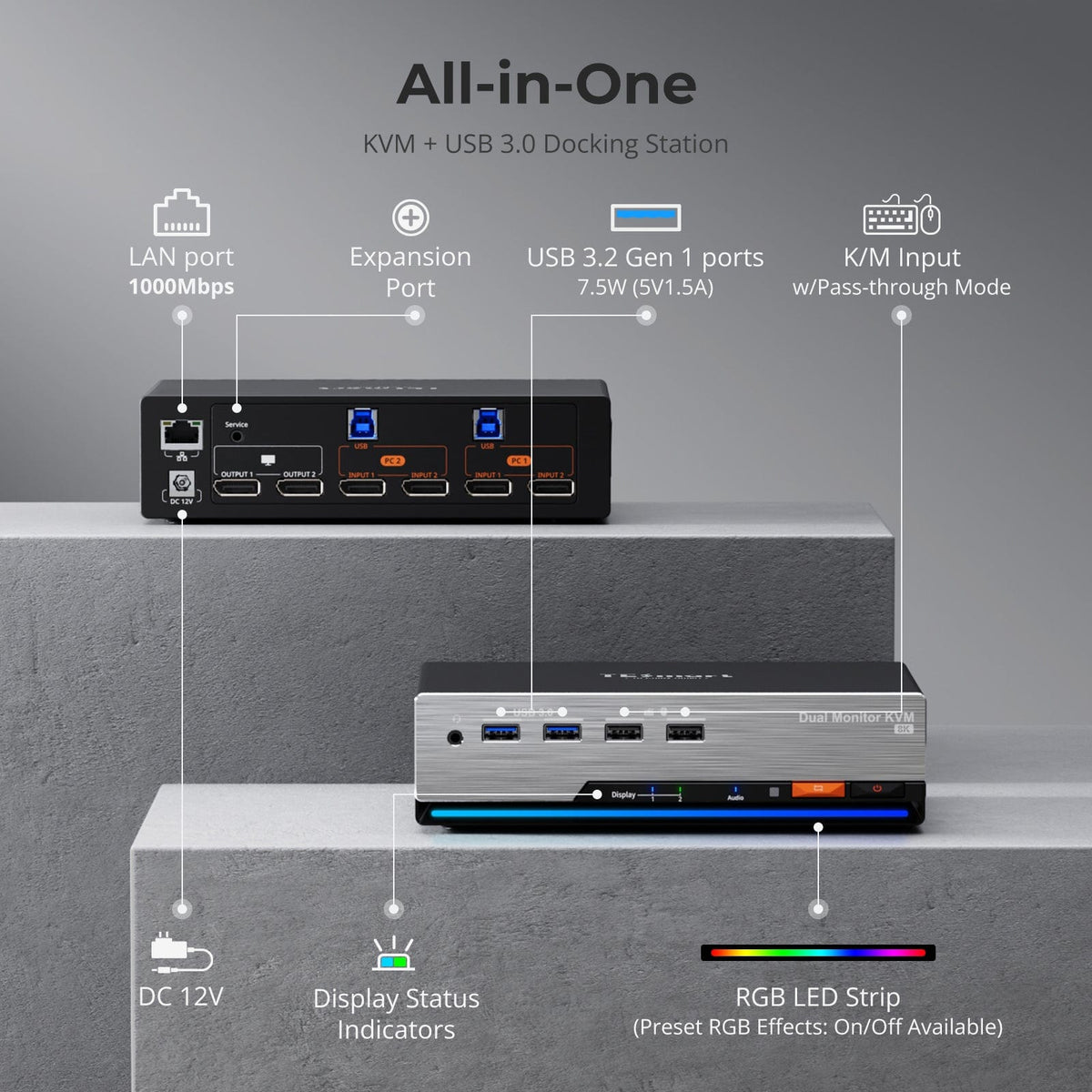
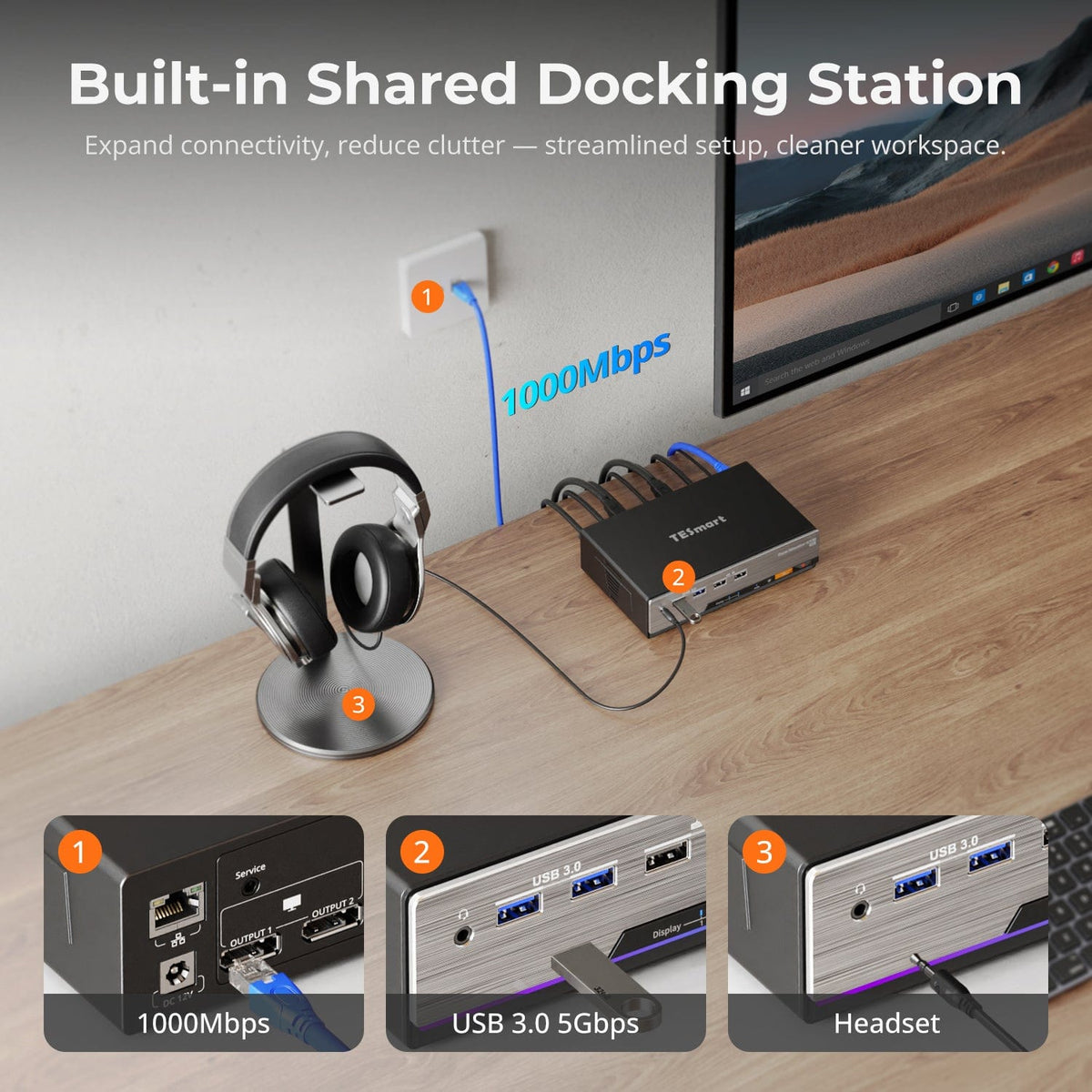
One dock serves both computers: share a 1000Mbps Gigabit Ethernet connection, USB 3.0 peripherals, and integrated audio/mic ports—expanding connectivity while cutting cable clutter for a cleaner desk.
08
09
10
Specifications & Support
Compatibility & Input Guide
Technical Specifications
Manuals & Downloads
Included in the Box
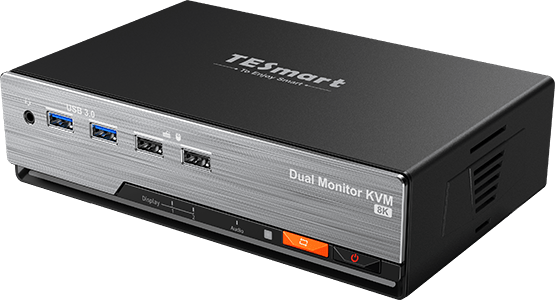
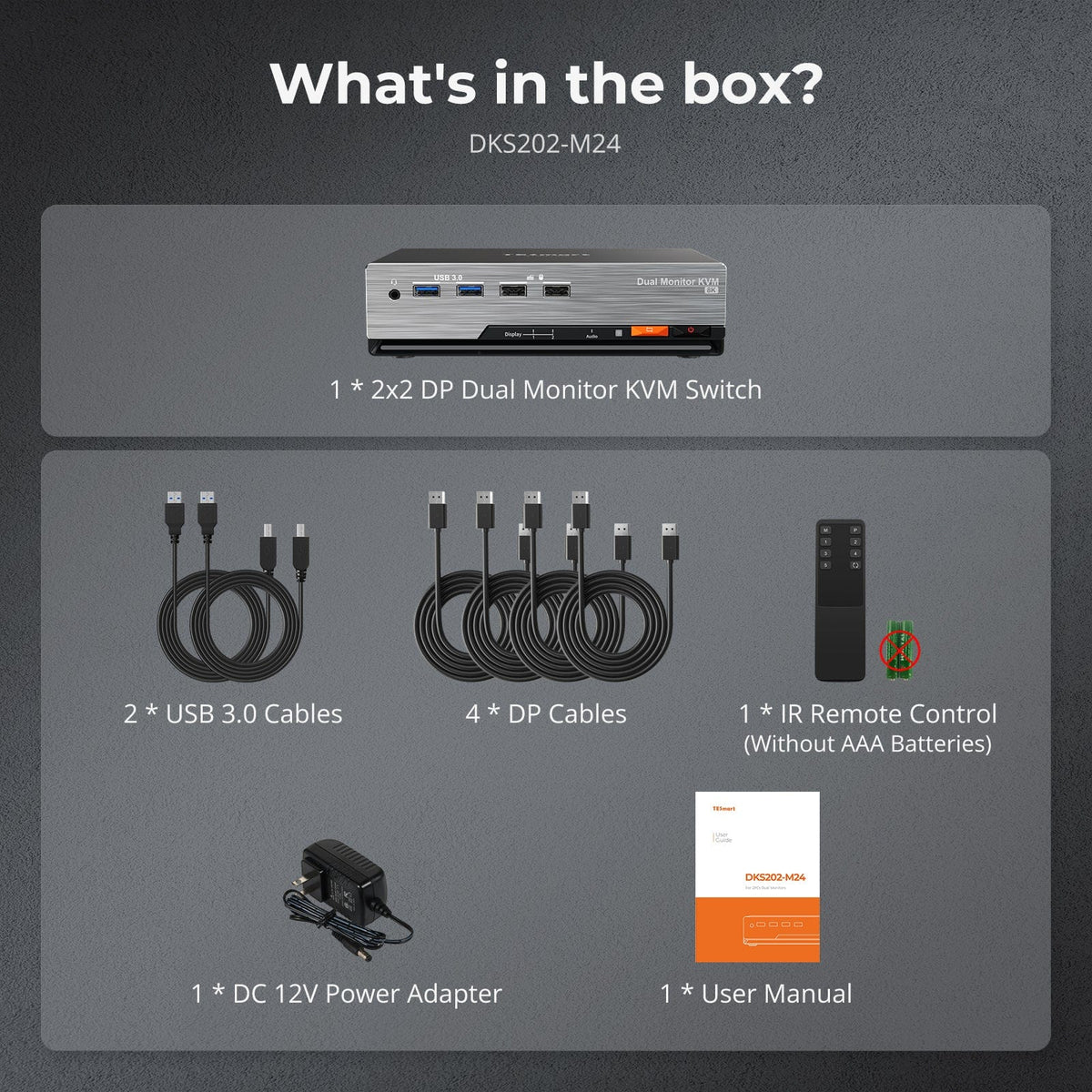
1 × DKS202-M24 KVM Switch
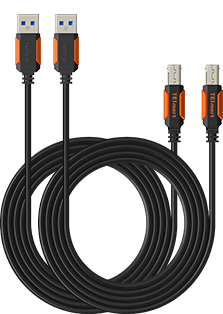
2 × USB 3.0 Cables
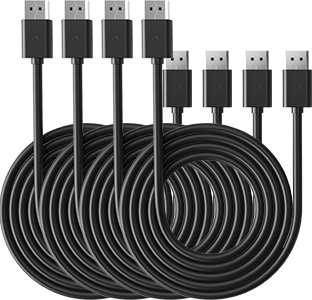
4 × DP Cables
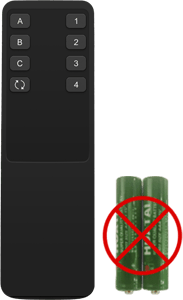
1 × IR Remote Control
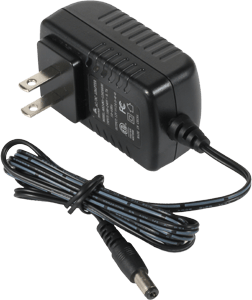
1 × DC 12V Power Adapter
1 × User Manual
FAQs
Visit our Help Center for more answers.
[Compatibility] What devices can I connect to DKS202-M24?
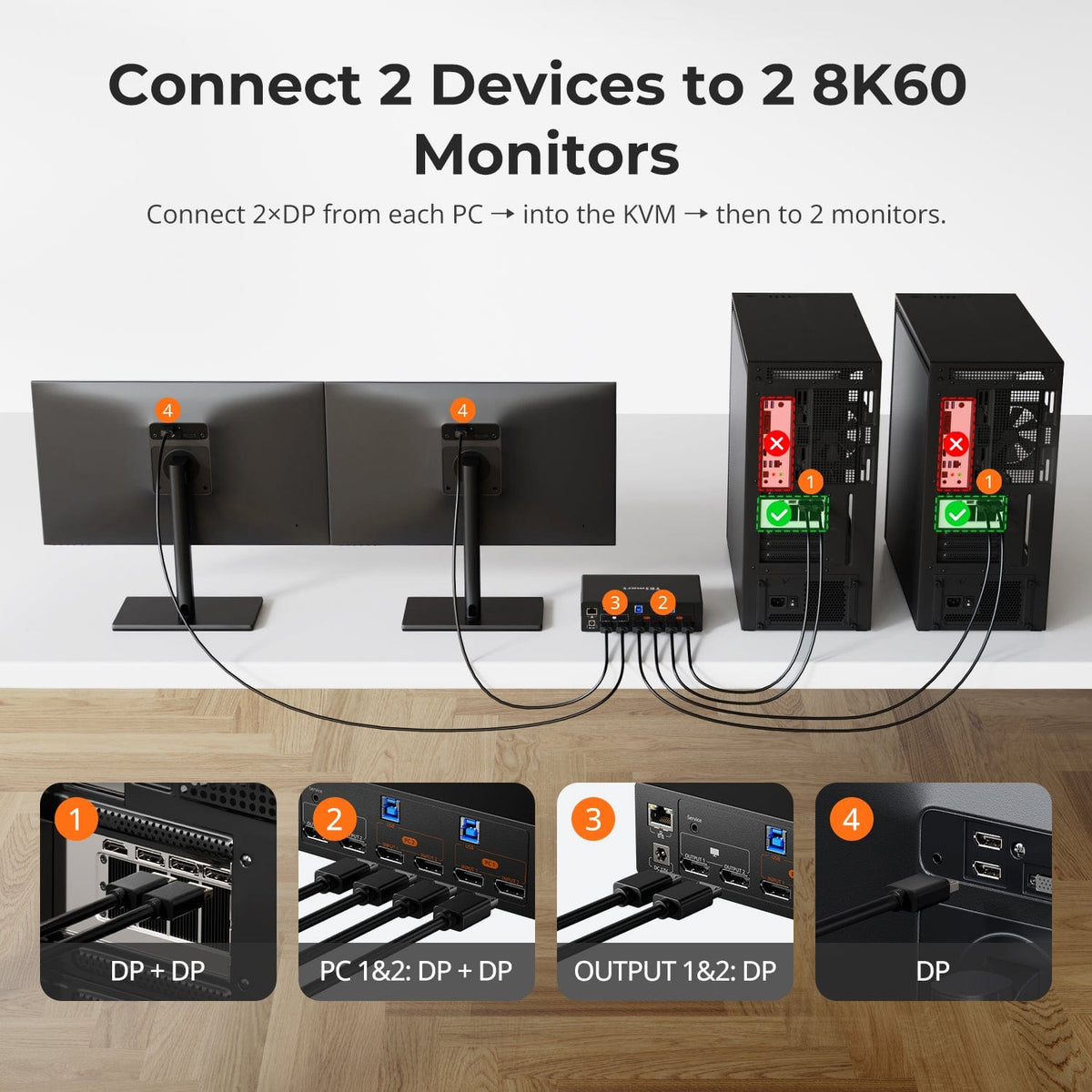
DKS202-M24 is designed for two DisplayPort computers and two DP monitors. Each computer connects via three DP cables and one USB-B cable.
A typical setup combines two PCs and three DP monitors, all controlled with one keyboard and mouse.
[Compatibility] Does DKS203-M24 support HDR and VRR?
Yes.
Built on DP 1.4, DKS202-M24 supports HDR high dynamic range and VRR pass-through. Actual HDR and VRR performance depends on the connected display and GPU supporting and enabling the respective features.
If you encounter any issues, please contact TESmart official support for assistance.
[Compatibility] Does DKS202-M24 support G-Sync and FreeSync?
Yes.
DKS202-M24 supports both NVIDIA G-Sync and AMD FreeSync adaptive sync pass-through, eliminating screen tearing and stuttering for smooth gaming.
Actual performance depends on the connected display supporting the respective technology and the GPU having it properly enabled.
[Compatibility] Should I choose DKS202-M24, DKS203-M24 or DKS403-M24?
Choose DKS202-M24 when two monitors are enough for the same two-PC setup, or DKS202-MC24 when you also want cross-PC mouse control and file copy through SmartClip.
Choose DKS203-M24 when two PCs need to drive three DP 1.4 monitors.
Choose DKS403-M24 when up to four PCs need three monitors.
[Features & Connections] What is the maximum supported resolution?
DKS202-M24 supports triple 8K@60Hz (DSC) output, with 4K@165Hz (DSC), 4K@144Hz, QHD@240Hz and 1080p@240Hz also available per output. Ultra-wide 32:9 at 120Hz and 21:9 at 144Hz are supported as well.
Actual resolution and refresh rate depend on the connected computers, displays, cables and selected display mode.
[Features & Connections] What display modes does DKS202-M24 support?
Two display modes are supported.
Mode 1 puts the same PC on all three monitors, extending or mirroring its desktop across every display.
Mode 2 spreads the two PCs across the three monitors, and you can double-press the Right-Alt key to switch keyboard and mouse focus while keeping both systems visible.
[Features & Connections] What does EDID emulation do?
Each input port includes an EDID emulator. When you switch computers, each PC continues to detect the display as connected, so desktop icons stay in place, windows do not resize and the screen does not flicker. Your multi-monitor layout remains unchanged.
[Features & Connections] Why is there no sound when an audio device is plugged into the 3.5mm audio port?
DKS203-M24 features an integrated microphone and L/R audio output port, and audio signals from the audio interface are transmitted through the USB channel. Confirm that the playback device selected in your computer's sound settings is set to the "USB Audio" channel.
[Features & Connections] Can I lock USB and audio to one computer while switching?
Yes.
Disable Follow Mode with the keyboard hotkey and the USB 3.0 devices and audio stay with the computer you chose while you switch displays and keyboard or mouse focus.
With Follow Mode off, audio and USB channels can also be switched independently by hotkey.
[Setup & Switching] How can I switch between connected devices?
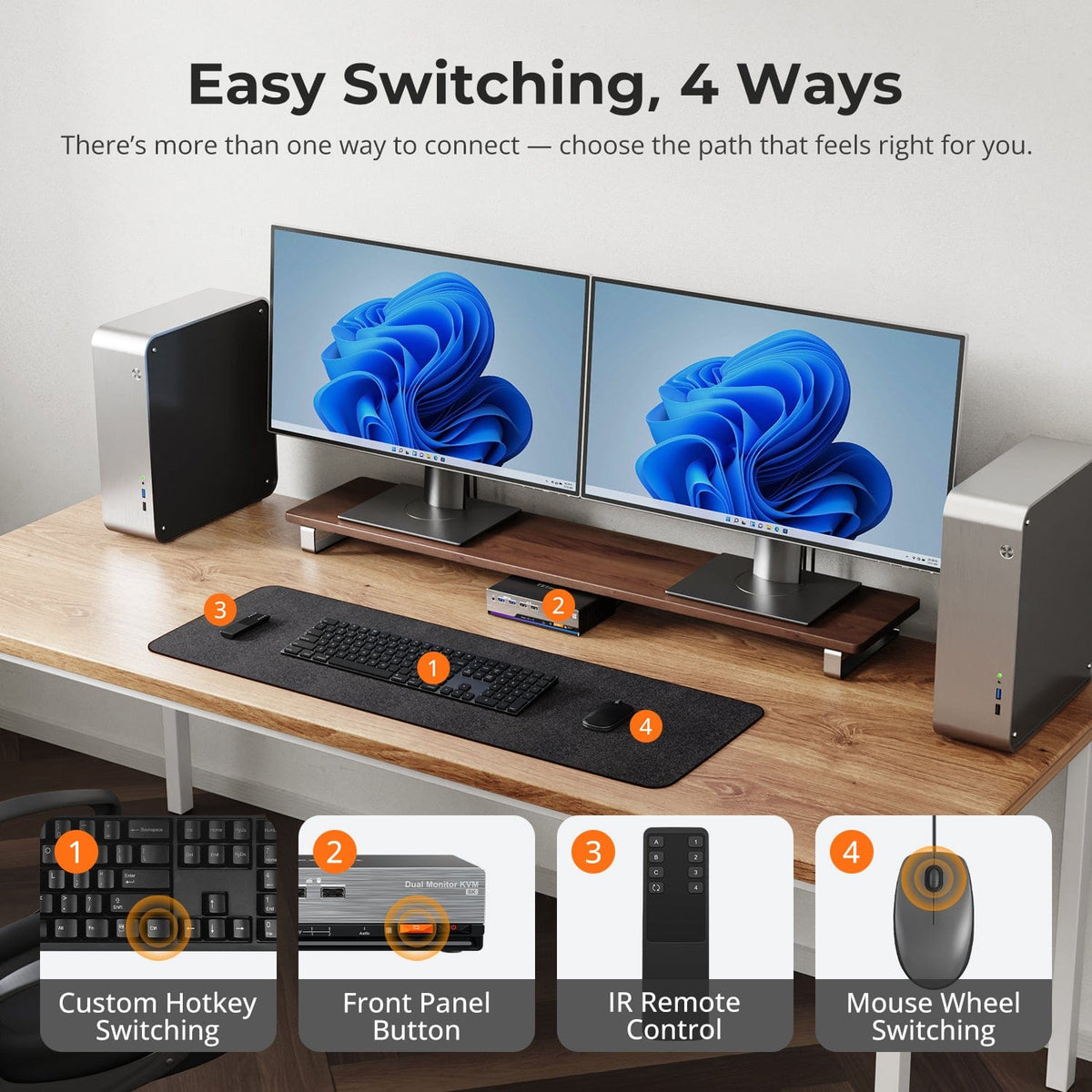
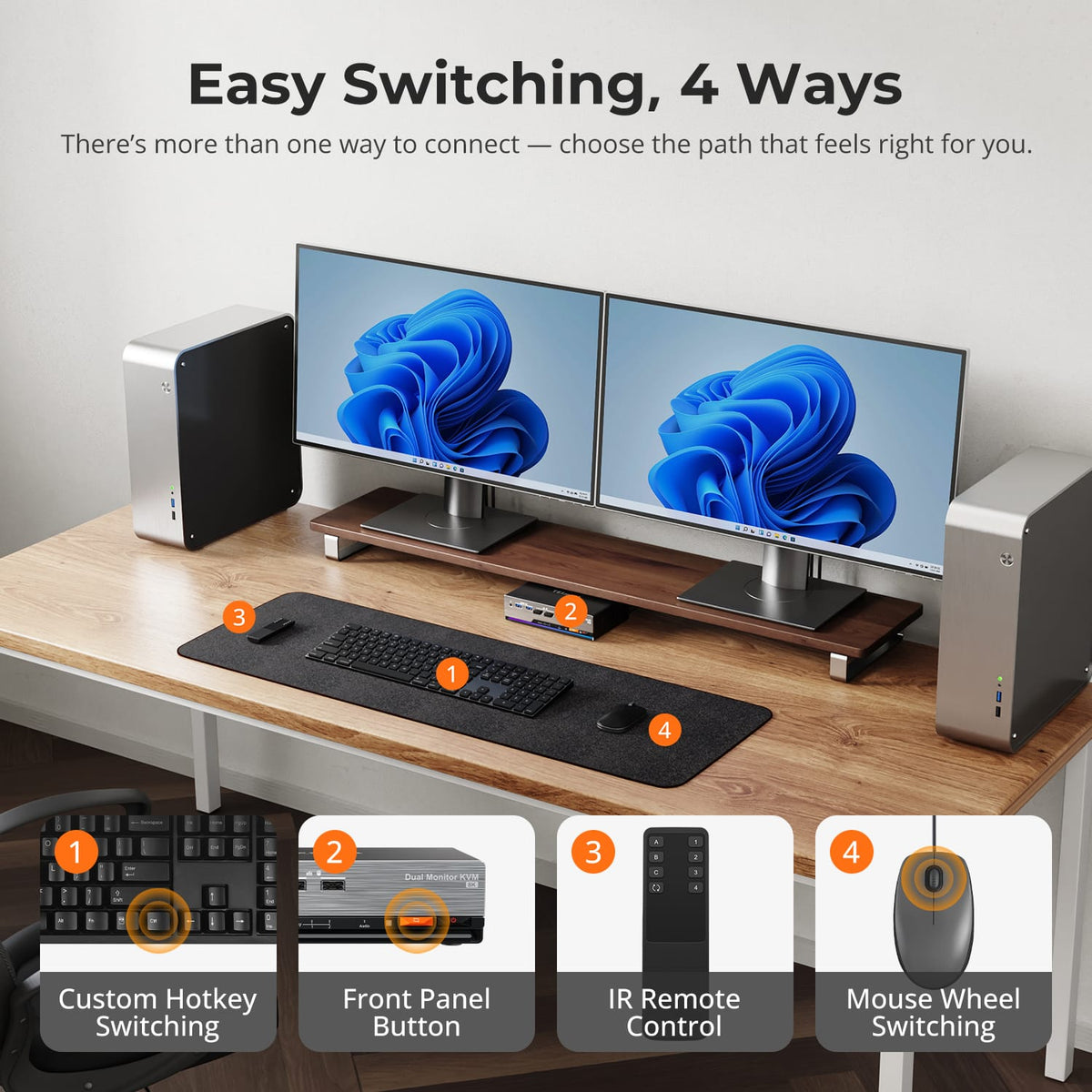
DKS202-M24 provides four switching methods: front-panel button, IR remote control, keyboard hotkeys and mouse-wheel switching.
Mouse-wheel switching is off by default and must be turned on with a hotkey; double-click the mouse wheel to move to the next computer.
[Setup & Switching] Do I need to install drivers or software?
DKS202-M24 is plug-and-play: display switching and keyboard and mouse control work without installing any driver or software.
Some advanced peripherals may still require their own drivers.
[Setup & Switching] Does DKS202-M24 support keyboard hotkeys?
Yes.
Connect a compatible wired USB keyboard to the dedicated keyboard port to use hotkey controls.
Hotkey functions may not work through Bluetooth keyboards, general USB hubs or some wireless receivers. The default trigger key is Right-Ctrl, pressed twice before the command key.
[Setup & Switching] What should I do if Right-Ctrl conflicts with the hotkey combination?
DKS202-M24 includes a custom hotkey function that lets you use any key on the connected keyboard as the hotkey trigger. The default trigger key is Right-Ctrl.
Method 1: after powering on the KVM, press and hold the front-panel button for 10 seconds until the buzzer emits a long beep, then press your preferred trigger key within 5 seconds.
Method 2: press Right-Ctrl → Right-Ctrl → F1, then press your preferred trigger key within 5 seconds.
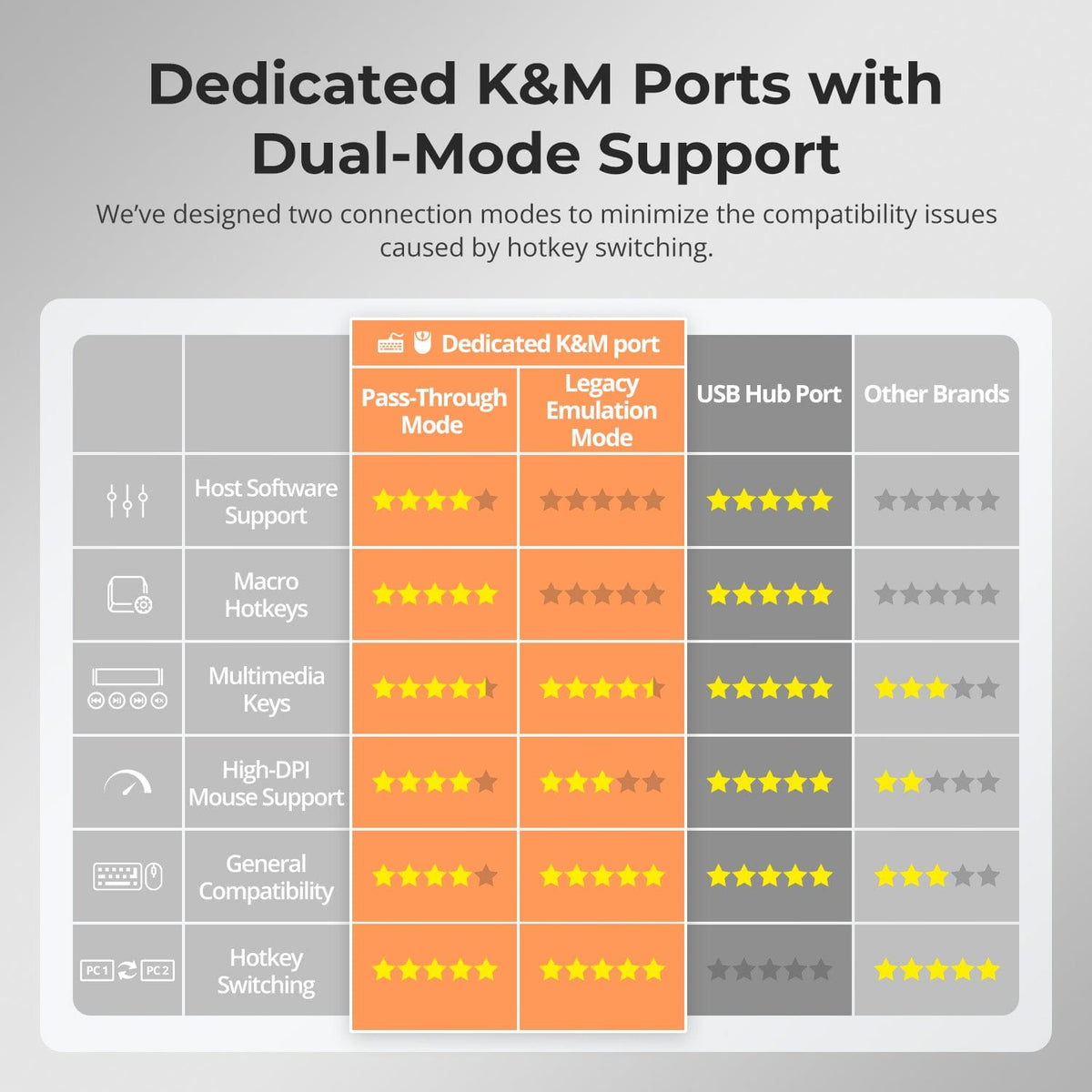
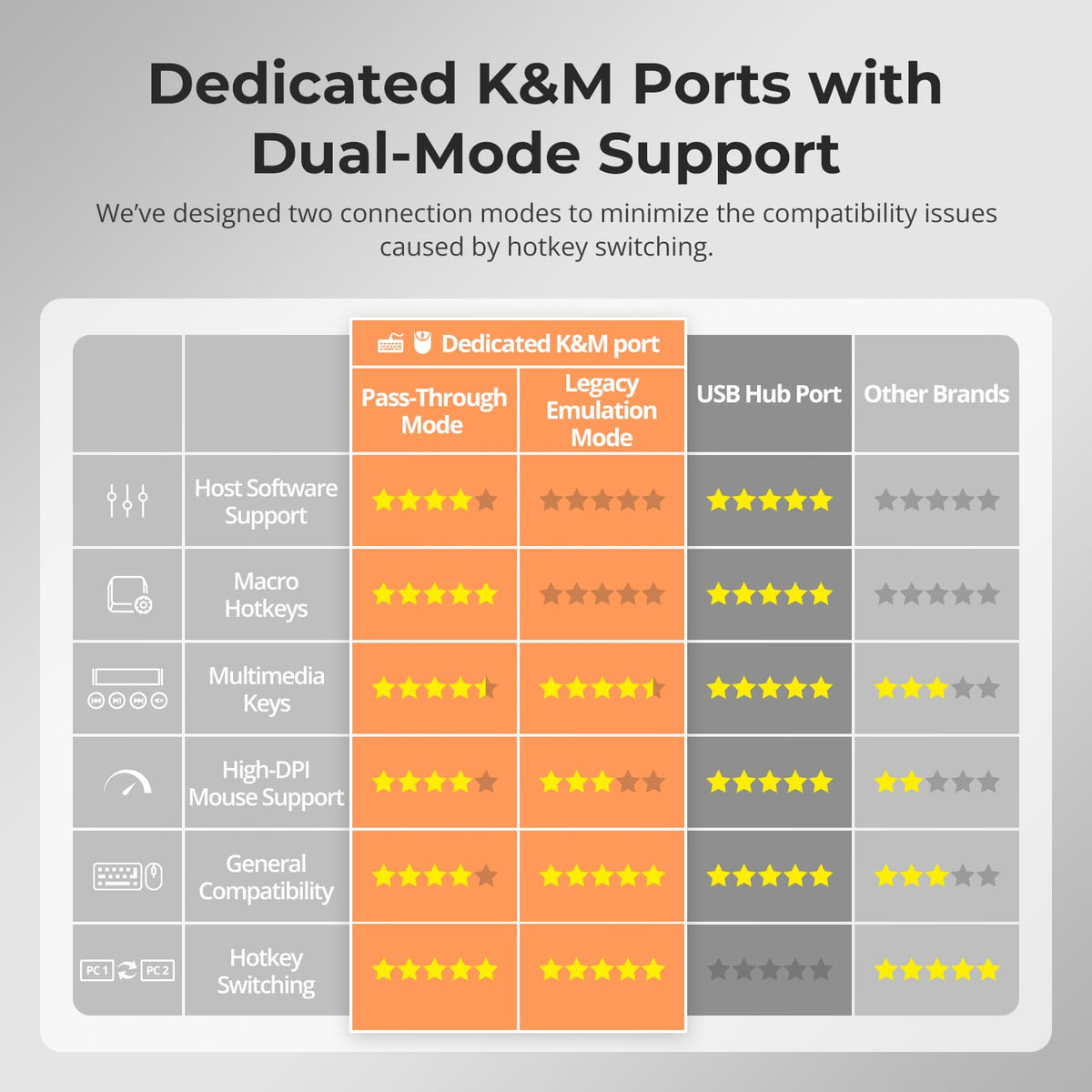
[Setup & Switching] What are Pass-Through Mode and Legacy Emulation Mode?
Pass-Through Mode is recommended for most modern keyboards and mice and supports many advanced peripheral functions.
Legacy Emulation Mode can improve basic keyboard, mouse and hotkey compatibility when a device does not operate correctly in Pass-Through Mode. Some advanced keyboard or mouse software functions may be unavailable