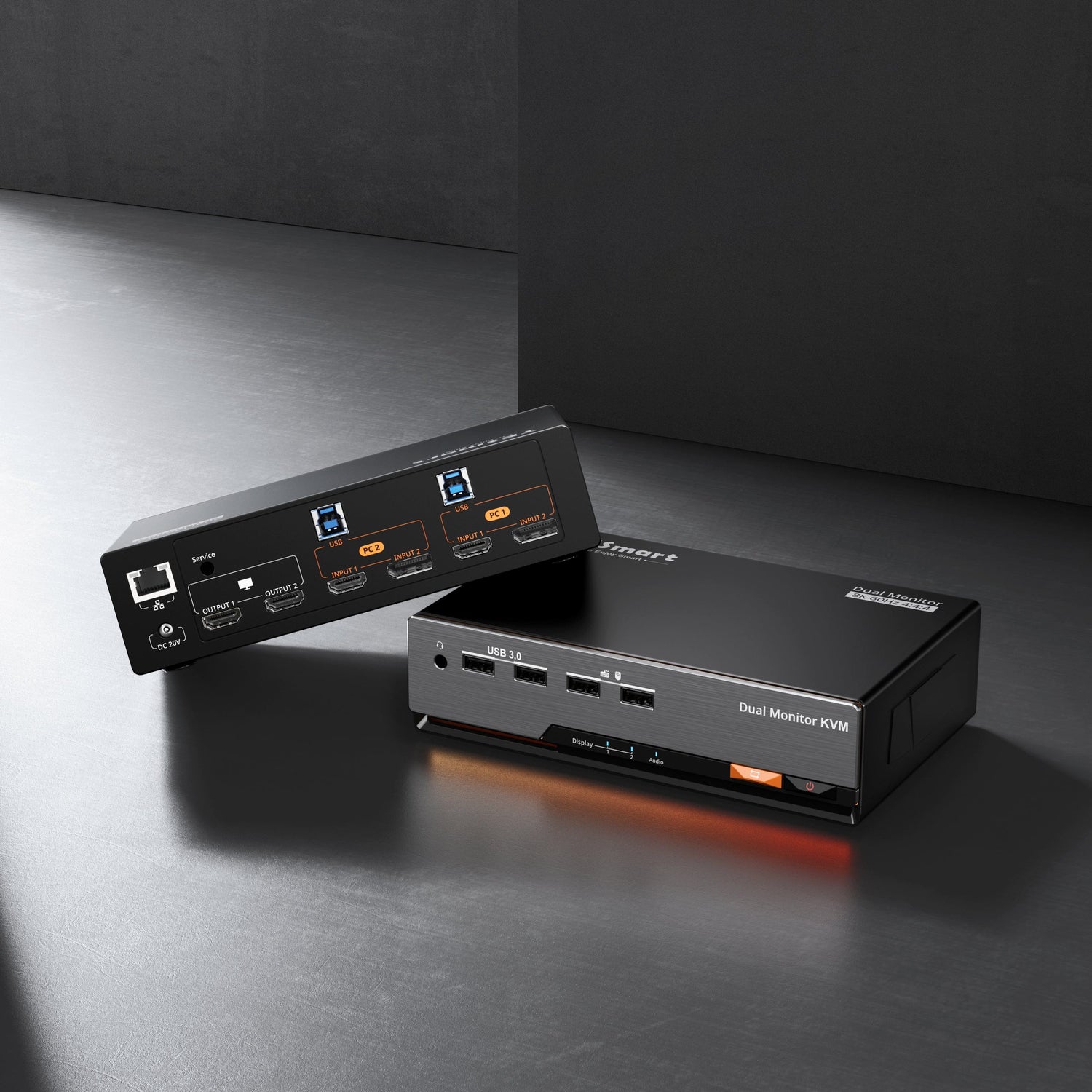
When using both a MacBook Pro and a high-performance Windows workstation, and needing to share a professional monitor between the two computers, you'll encounter two main options when choosing a KVM switch: the more expensive Thunderbolt interface solution and the more economical USB-C (DP-ALT) solution. What are the technical differences between the two?
01 Core Technical Differences
The core difference between Thunderbolt and USB-C (DP-ALT) ports lies primarily in their technical architecture. Thunderbolt technology is essentially an integration of PCI Express and DisplayPort, providing high-performance, low-latency data transmission and video signal processing capabilities through a dedicated controller chip.

In contrast, USB-C (DP-ALT) mode is a "functional extension" of the USB-C interface. It reallocates some of the USB-C interface pins to transmit DisplayPort video signals, without requiring an additional dedicated chip.
This architectural difference directly impacts the complexity of their implementation. Thunderbolt interfaces require a dedicated Thunderbolt controller chip and Intel certification, increasing hardware costs; while USB-C (DP-ALT) can utilize existing USB-C interface infrastructure, implementing functionality through firmware and drivers.
Essentially, Thunderbolt is an independent interface protocol, while USB-C (DP-ALT) is a working mode of the USB-C interface. This fundamental difference determines their different performance, functionality, and compatibility.
02 Performance Comparison

In practical testing, Thunderbolt ports performed more stably when simultaneously transmitting high-resolution video and large amounts of data, while USB-C (DP-ALT) may experience performance fluctuations due to bandwidth competition under heavy load.
03 Compatibility and Ecosystem Support
Device compatibility is a crucial consideration for users. Thunderbolt ports are almost universally present in the Apple ecosystem, from MacBooks to iMacs, offering the highest level of functionality. In the Windows world, Thunderbolt adoption is lower, mainly limited to high-end laptops and workstations.

The biggest advantage of USB-C (DP-ALT) is its wide compatibility. Almost any device with a USB-C port can utilize this function (system support required), from smartphones and tablets to various laptops.
In terms of peripheral support, the Thunderbolt ecosystem offers daisy-chaining capabilities, allowing users to connect multiple devices through a single interface; most USB-C (DP-ALT) implementations require additional docking stations or hubs to connect multiple peripherals.
Certification and standardization also differ: Thunderbolt has a rigorous certification process, ensuring compatibility and performance consistency; USB-C (DP-ALT) implementations vary by manufacturer, potentially leading to compatibility issues, especially regarding video resolution and refresh rate support.
04 Practical Application Scenario Selection Guide
When faced with these two interface options, users should choose based on their workflow and device ecosystem:

Creative professionals (video editors, 3D designers, etc.) typically need to drive high-resolution displays and transfer large files. For them, the stable high bandwidth and multi-monitor support offered by Thunderbolt ports are worth the investment, especially for users of high-end displays like the Apple Pro Display XDR.
Multi-platform users need to switch between different brands of devices. If primarily using modern Mac devices, the Thunderbolt solution provides the best experience; if using a variety of devices (including Android devices, older laptops, etc.), the USB-C (DP-ALT) solution offers greater flexibility and cost-effectiveness.
Enterprise deployments need to consider standardization and total cost of ownership. A predominantly Apple device environment is suitable for a unified Thunderbolt KVM deployment; large organizations with diverse device types may prefer the USB-C (DP-ALT) solution due to its lower cost and broader compatibility.
Future compatibility is also a factor. With the promotion of the USB4 standard (which integrates Thunderbolt 3 technology), the performance gap between high-end USB4 devices and Thunderbolt devices is narrowing. However, for current users, the choice should be based on existing equipment and immediate needs.
05 Cost and Value Analysis
Cost differences mainly stem from technological complexity and certification requirements. Thunderbolt KVM switches are typically 30-50% more expensive than comparable USB-C (DP-ALT) solutions. This price premium buys you more stable performance, more complete functionality, and better compatibility guarantees.

From a long-term value perspective, Thunderbolt interfaces offer greater technological foresight, better adapting to the future development of high-resolution displays and high-speed peripherals; while USB-C (DP-ALT) solutions provide a more cost-effective solution for current needs.
For users with limited budgets, a practical strategy is to prioritize investment in the areas that most impact efficiency in their core workflow. If video transmission quality and multi-monitor stability are critical pain points, the value of a Thunderbolt solution may outweigh its cost premium; if basic functionality is sufficient, USB-C (DP-ALT) is a more economical choice.