


Display Setup
Max Display Output
Device Setup
Display Stability
Display Technology
USB Speed
Keyboard & Mouse
Quad Monitor MST KVM Docking Station Kit - 4K60Hz, EDID for 4 PCs
Share two Apple Studio Displays, one keyboard and mouse between two computers—or show one computer on each display when you need both systems at once.
Display Setup
Max Display Output
Device Setup
Display Stability
Display Technology
USB Speed
Keyboard & Mouse
Quad Monitor MST KVM Docking Station Kit - 4K60Hz, EDID for 4 PCs
Why Choose HDK404-P23
Overview
01
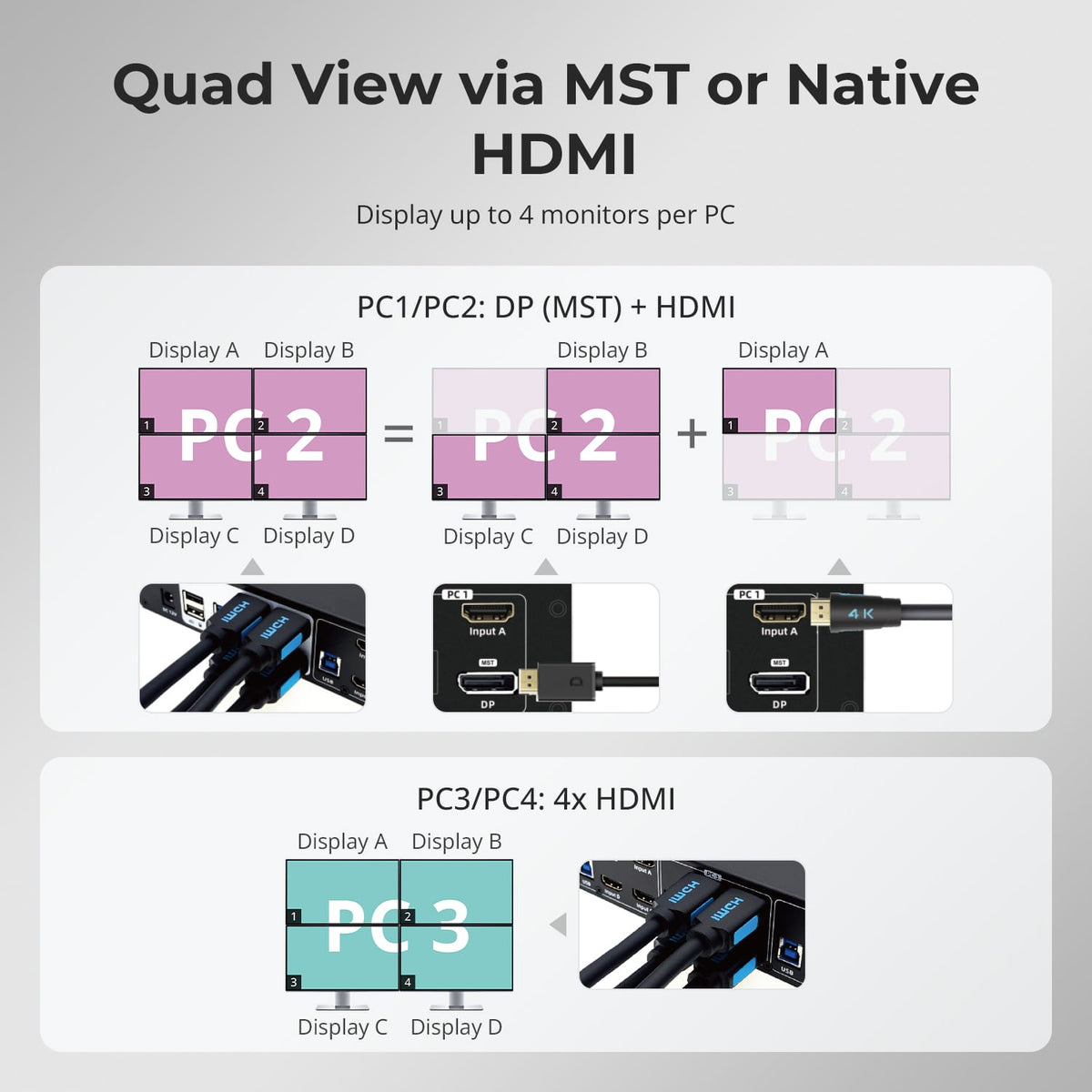
Choose MST or Native HDMI for Quad View
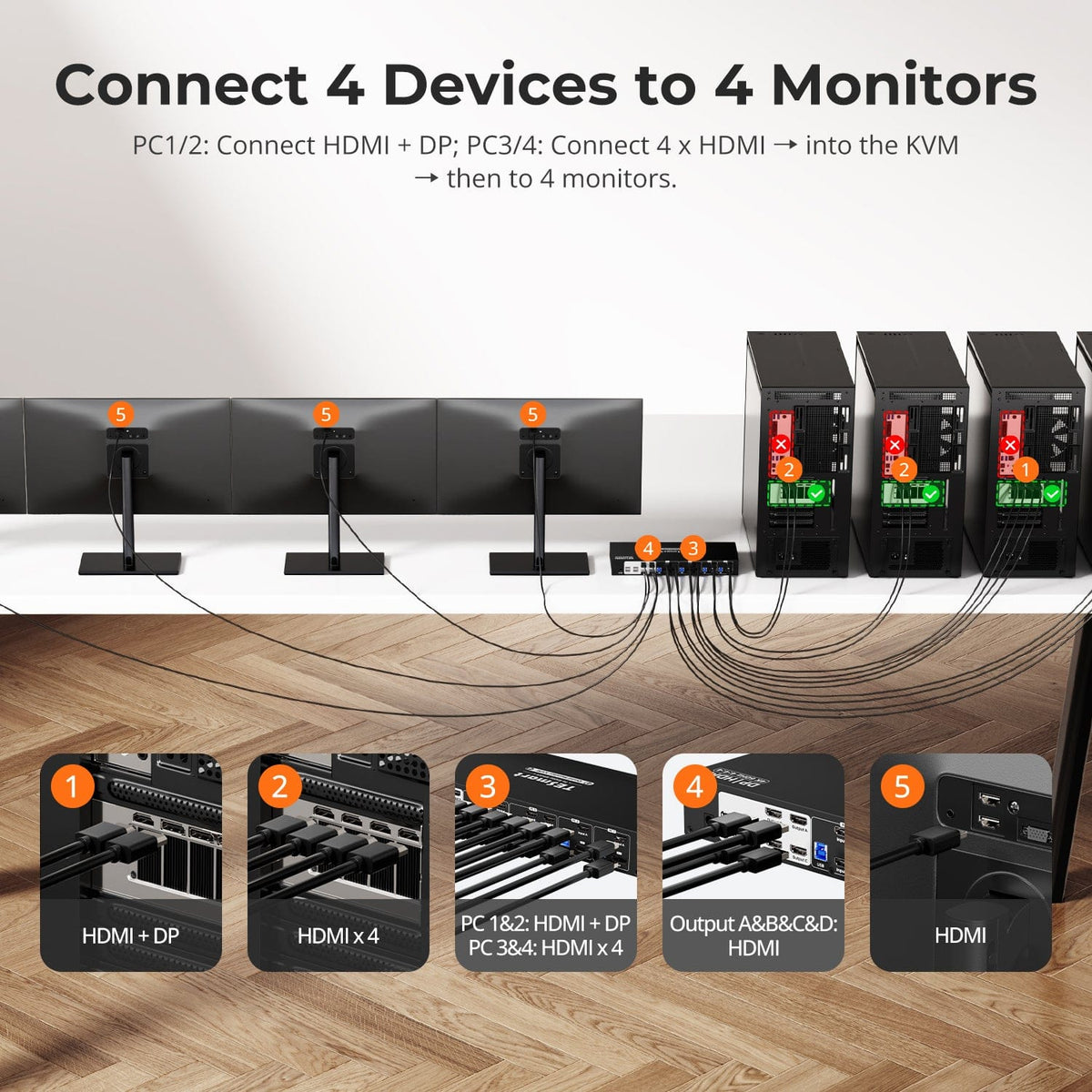
PC 1 and PC 2 can drive three outputs through one DisplayPort 1.2 MST connection plus a separate HDMI path for the fourth screen. PC 3 and PC 4 connect four HDMI outputs directly when the computer provides four native video signals.
02
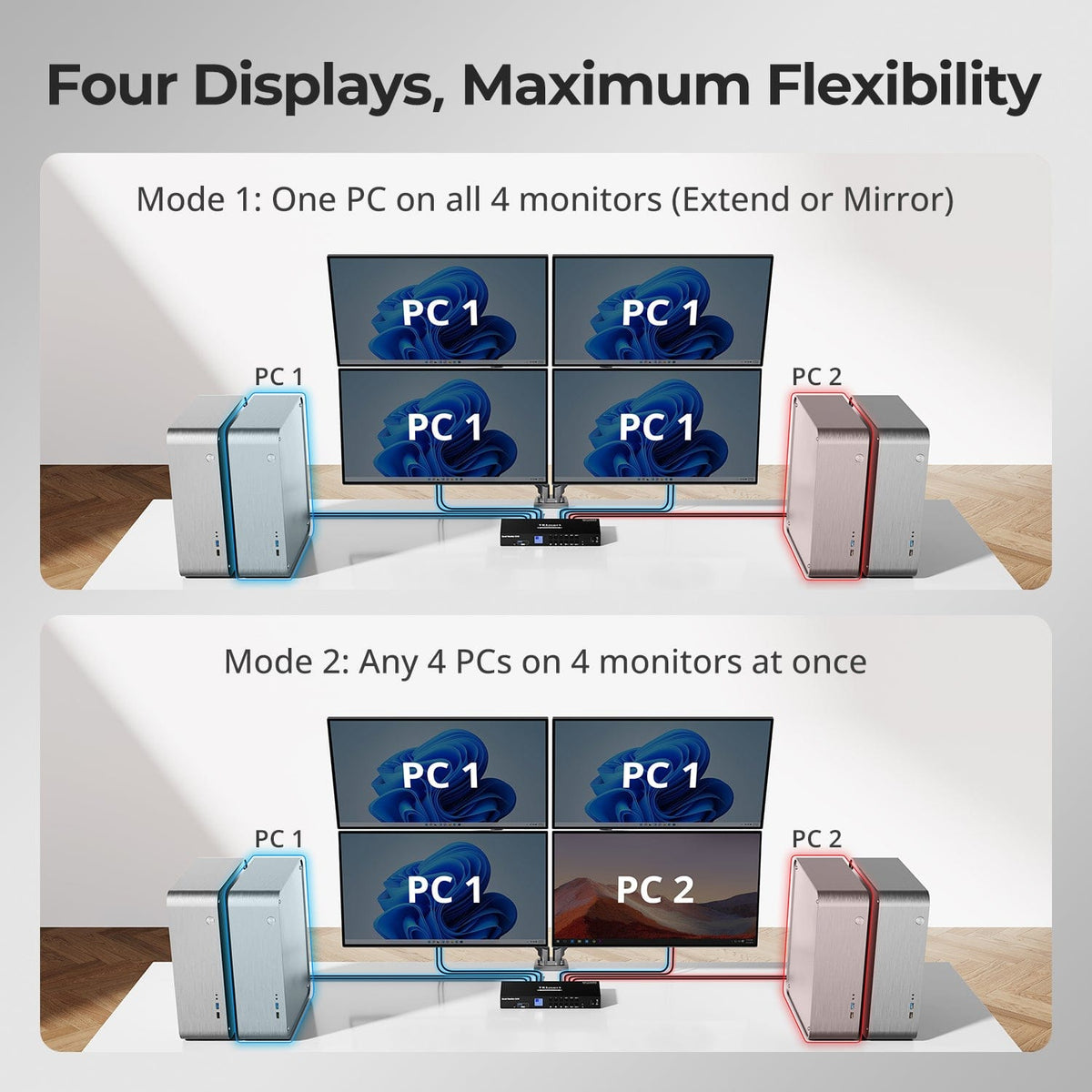
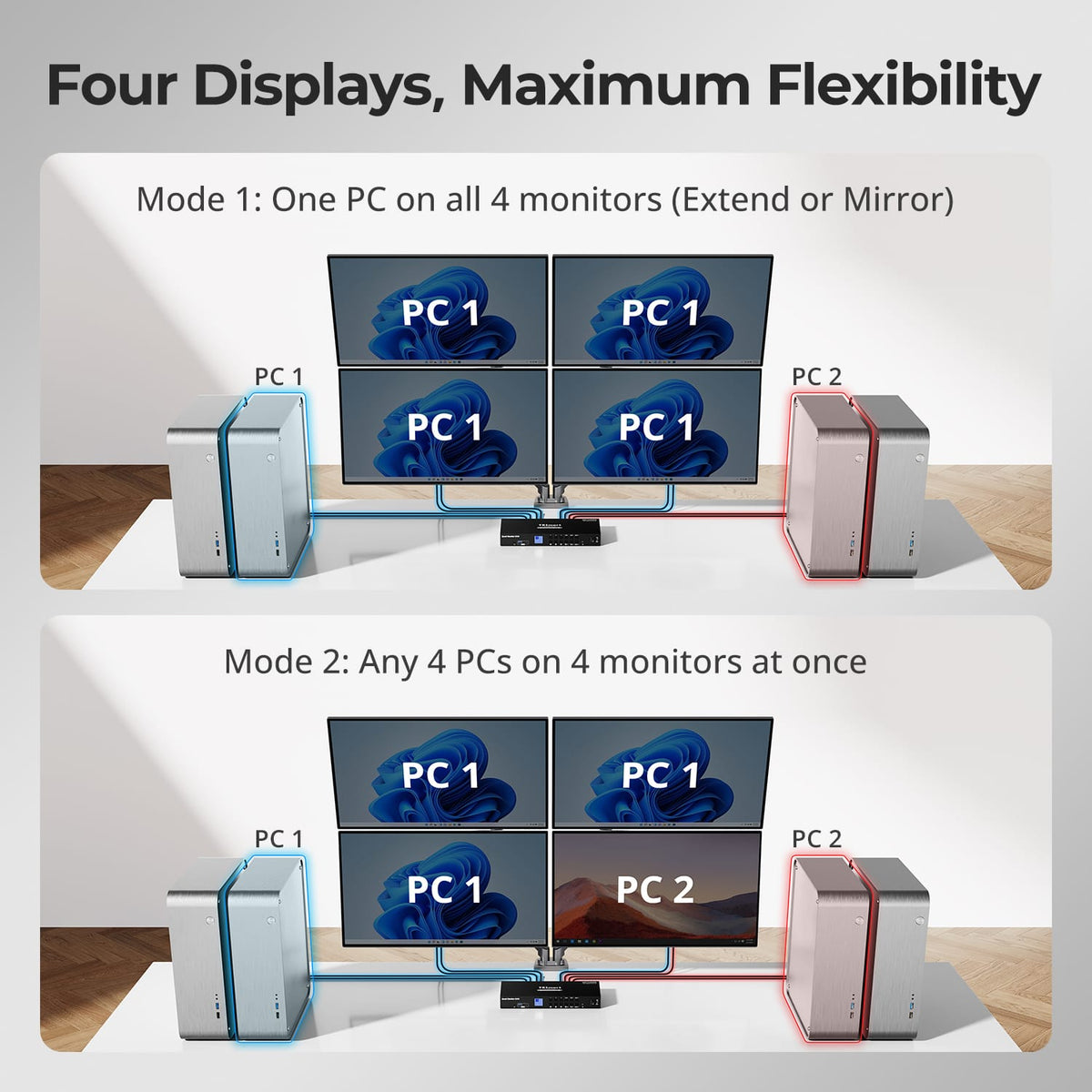
Four Displays, Flexible Viewing Modes
Use all four monitors with one computer in extended or mirrored mode, or display content from multiple computers across the four screens at the same time. Flexible display modes make it easy to adapt the workspace for multitasking, monitoring and multi-system workflows.
03
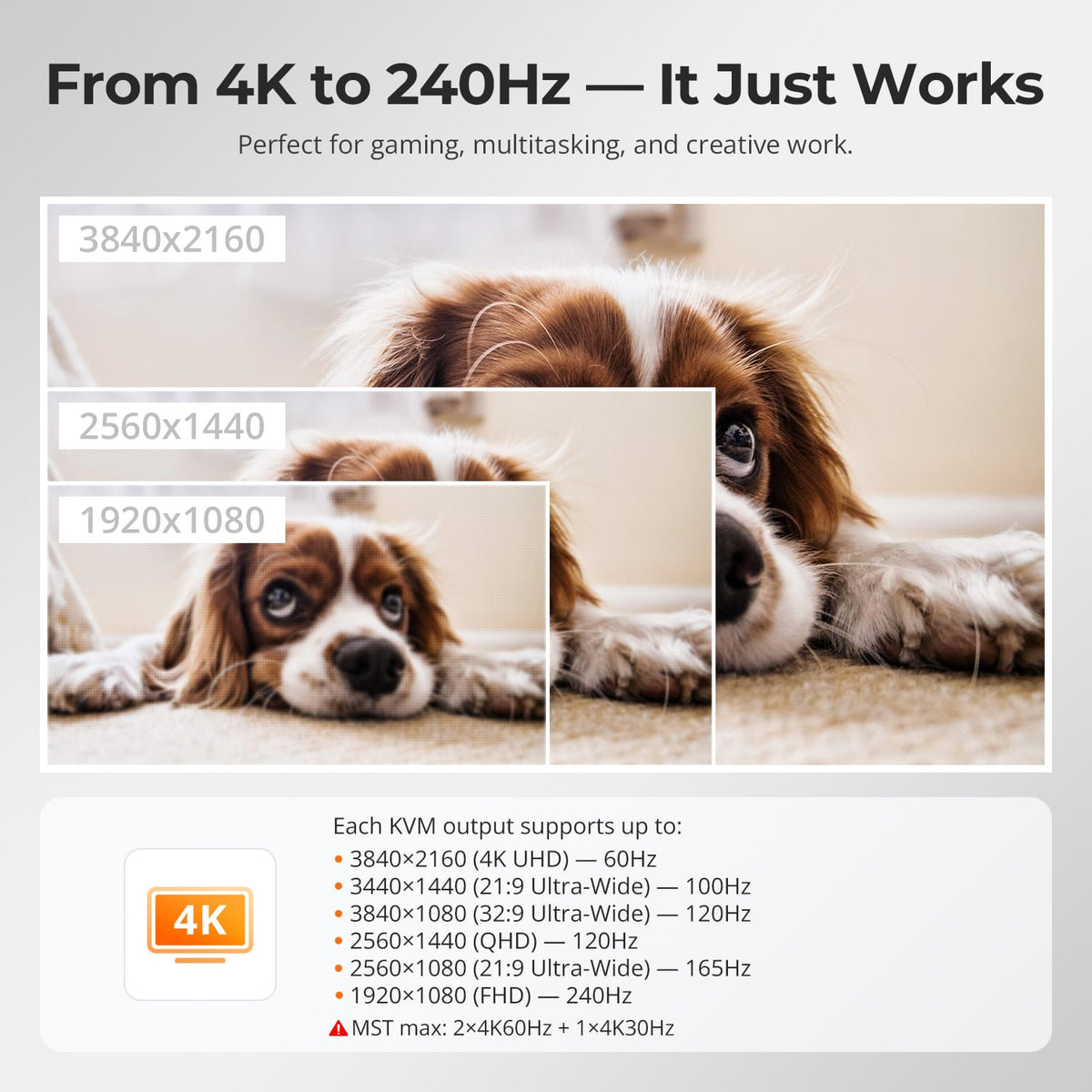
From 4K Clarity to 240Hz Smoothness
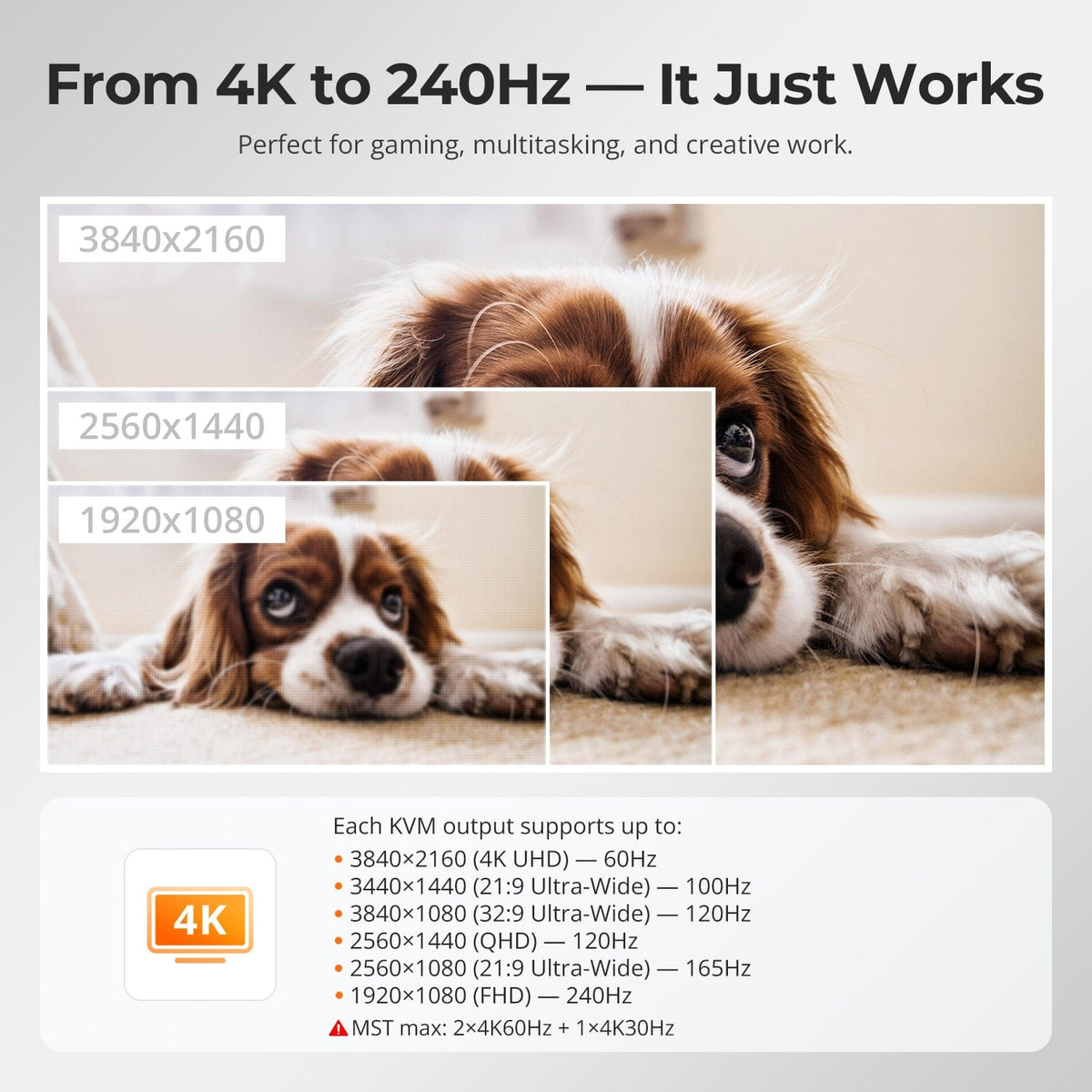
Each KVM output supports resolutions and refresh rates up to 4K@60Hz or 1080p@240Hz, with additional ultrawide and high-refresh options for work, gaming, and creative setups.
04
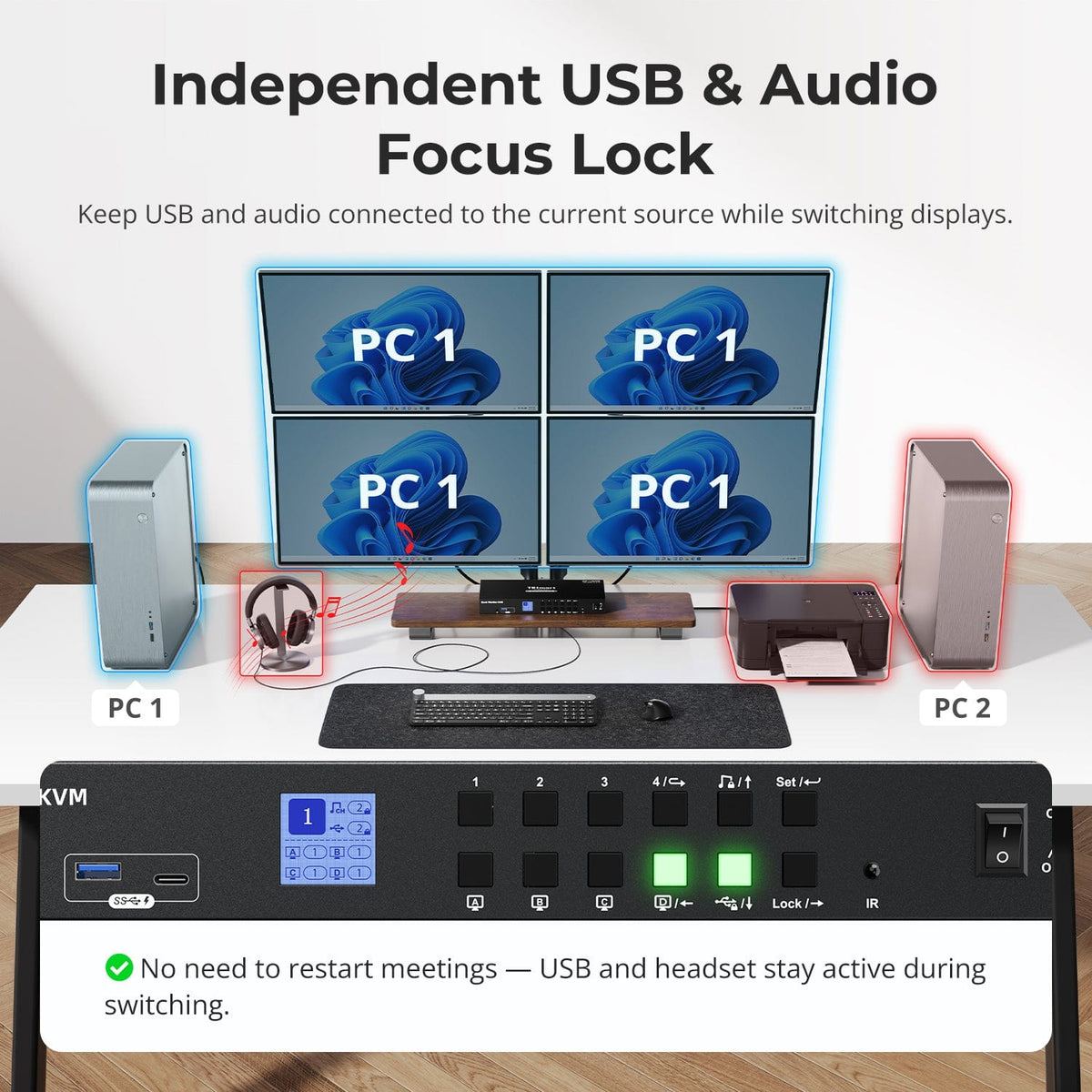
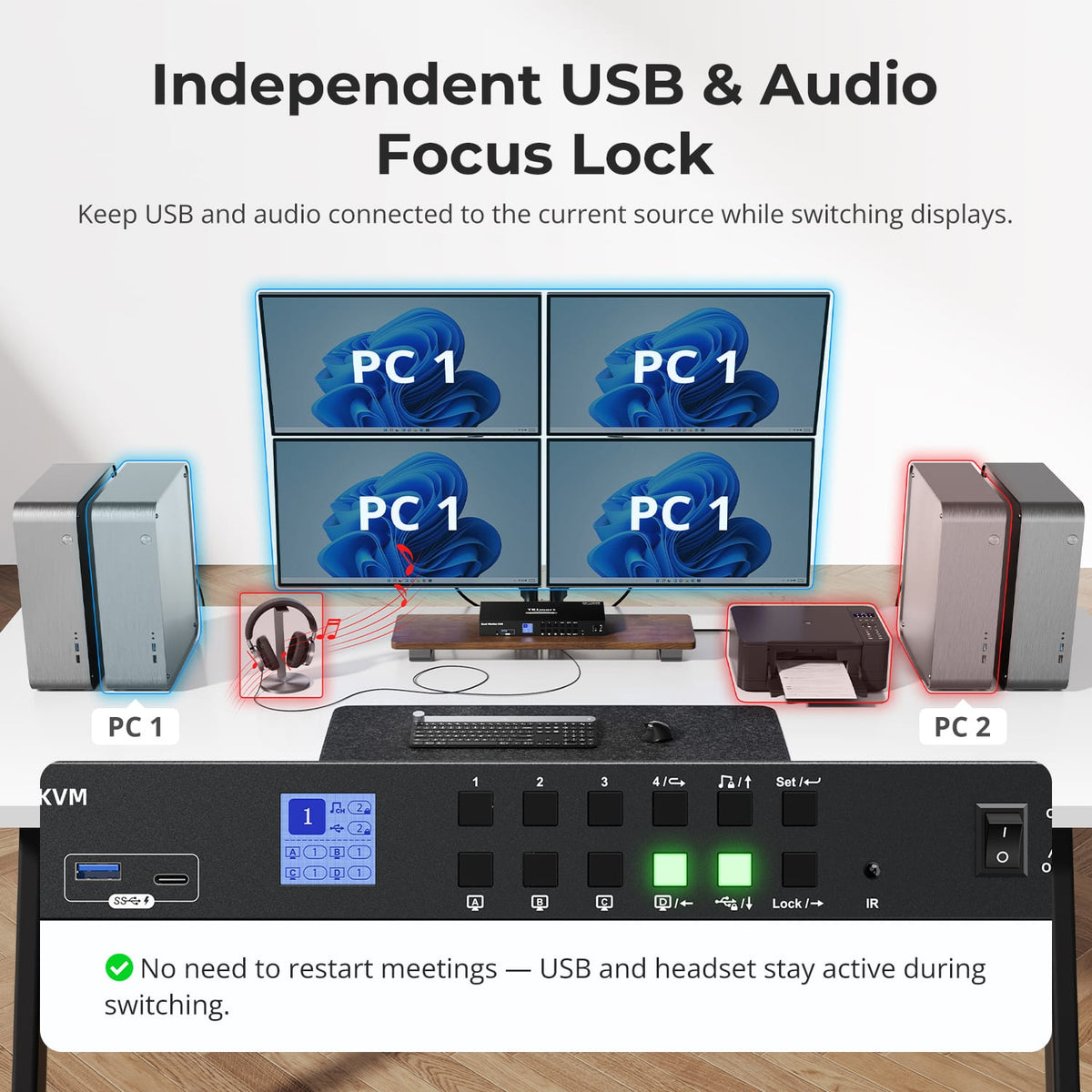
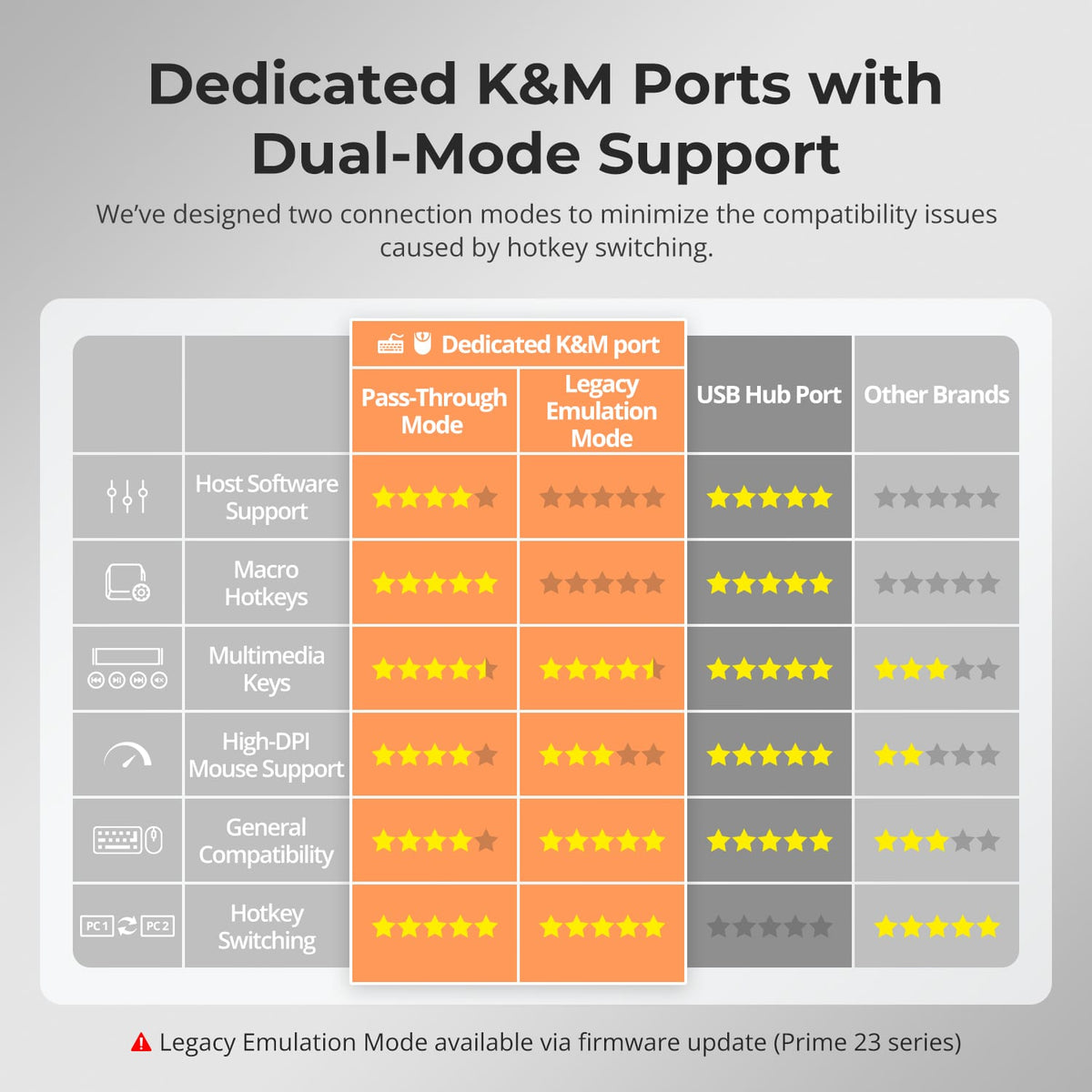
Keep USB and Audio with the Computer That Needs Them
Lock shared USB devices and L/R audio independently so a drive, headset or other peripheral can remain assigned to one computer while the displays switch. Keyboard and mouse focus remains separate from these locks.
05
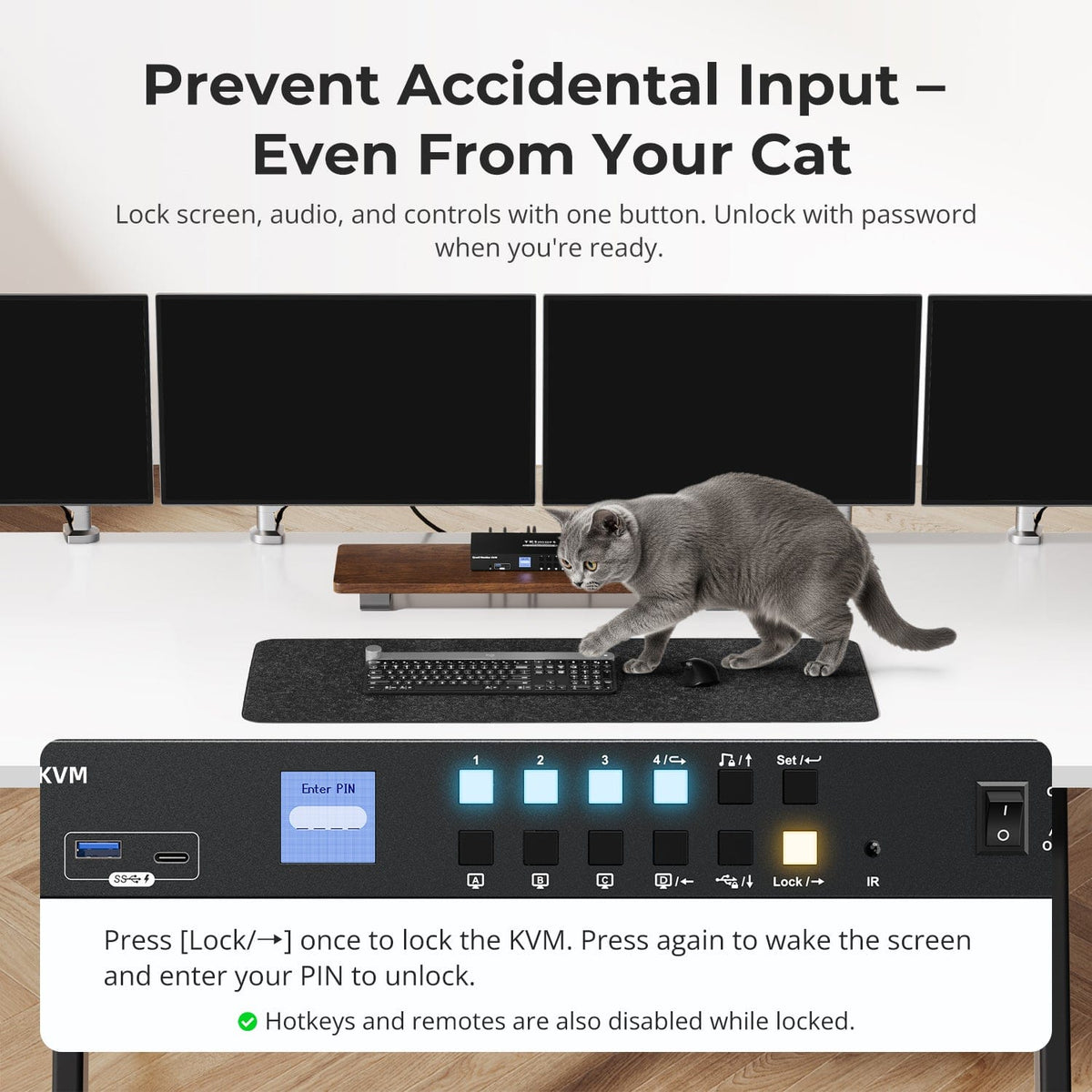
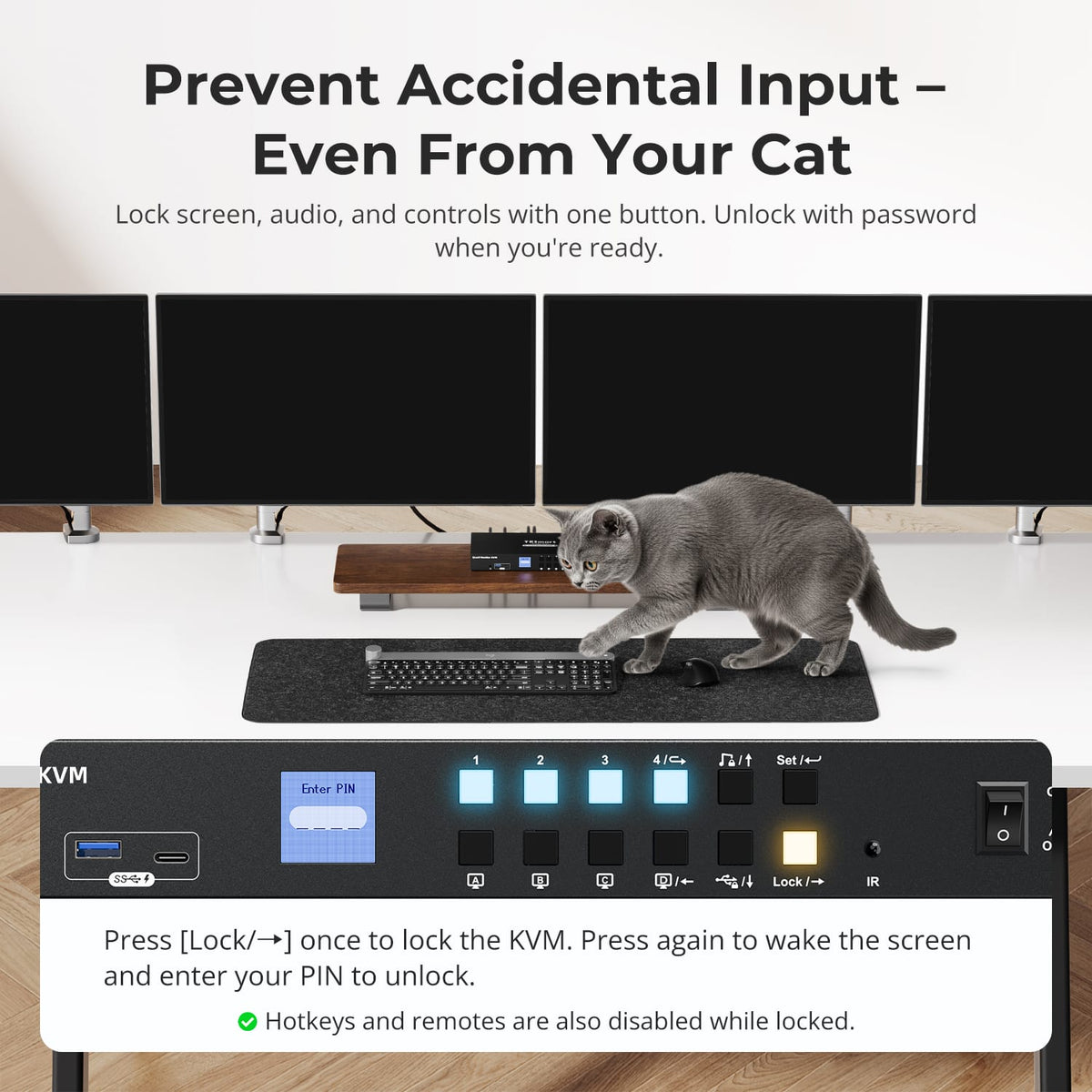
Lock the Workstation When It Must Stay Put
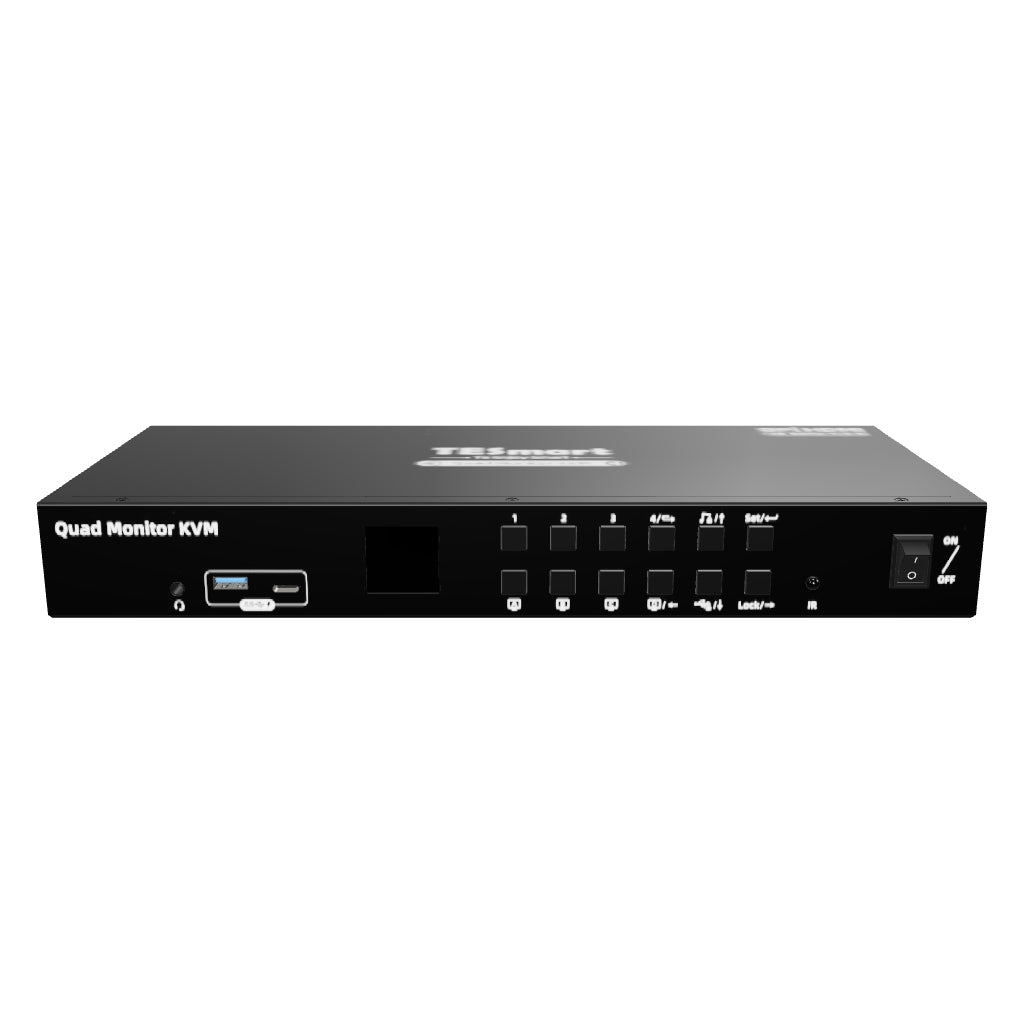
Use the front-panel Lock button to turn off all displays, pause audio and disable the controls. Wake the LCD and enter the configured numeric password to restore operation; the default password is 1234.
06
07
08
Specifications & Support
Compatibility & Input Guide
Technical Specifications
Manuals & Downloads
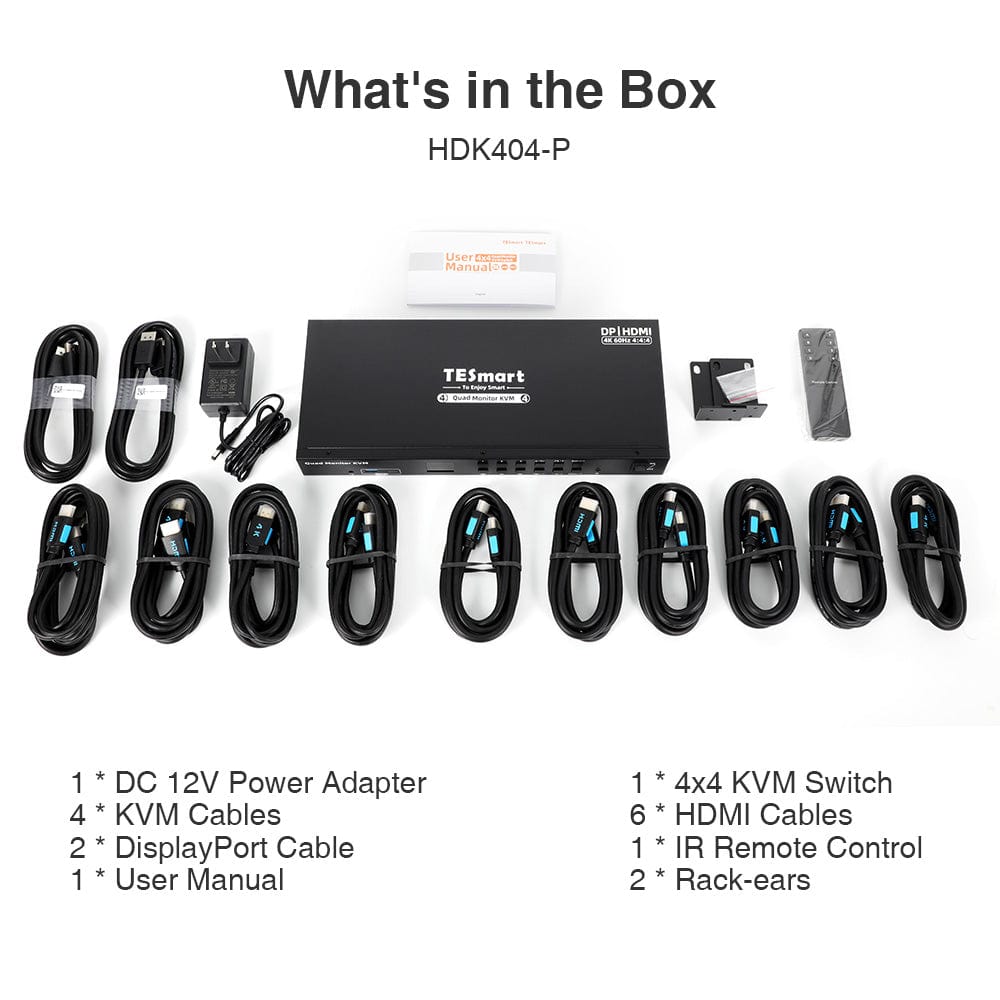
Included in the Box
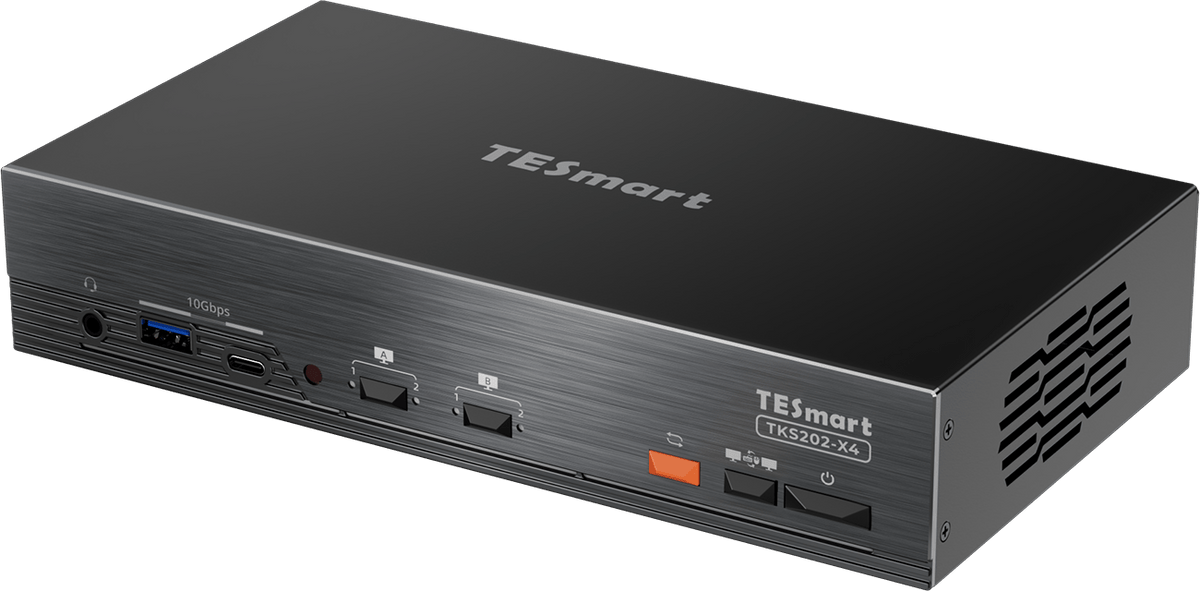
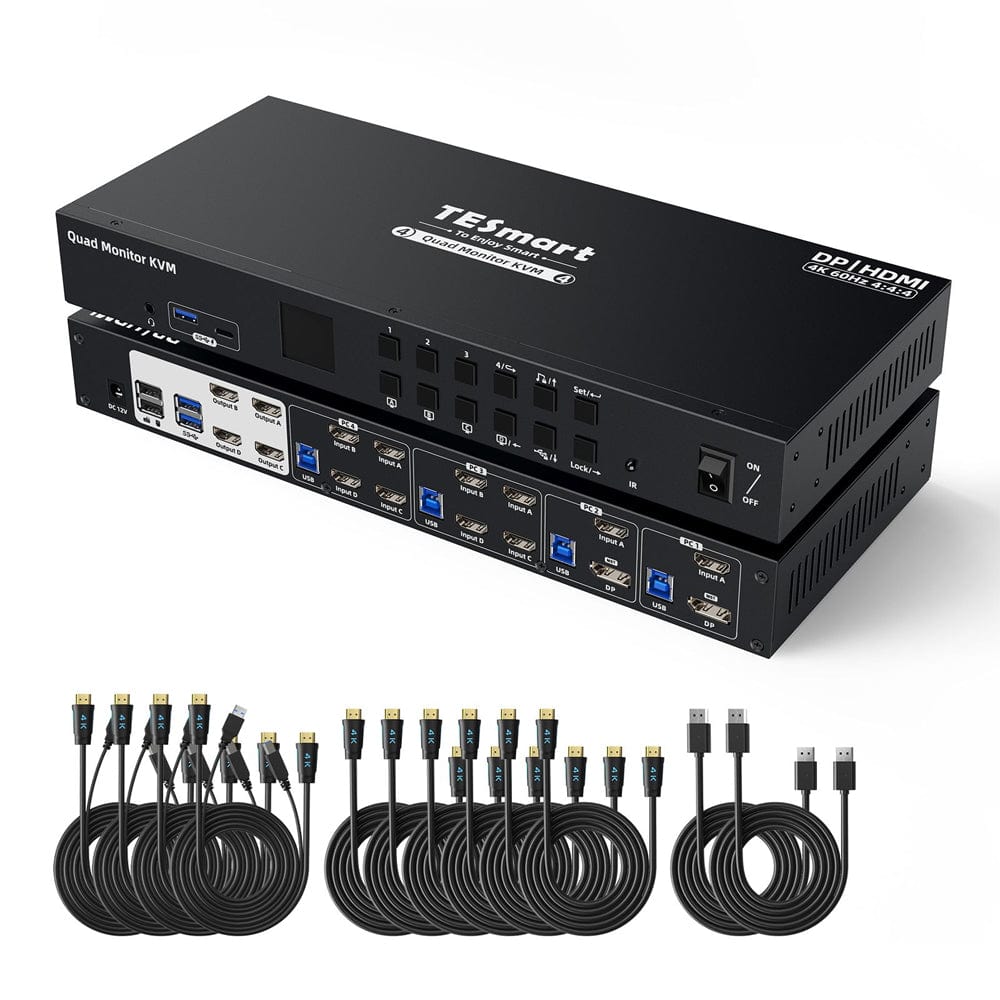
1 × TKS202-X4 KVM Switch
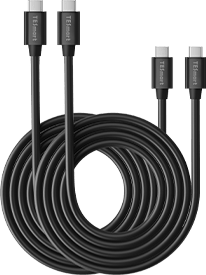
2 × 40Gbps USB-C Cables
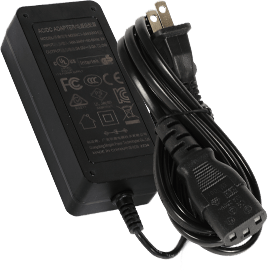
1 × DC 20V Power Adapter
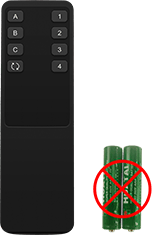
1 × IR Remote Control
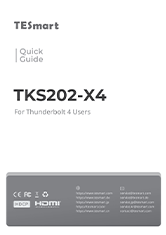
1 × User Manual
FAQs
Visit our Help Center for more answers.
[Compatibility] What computers and monitors can I connect to HDK404-P23?
Connect four computers and four HDMI monitors. PC 1 and PC 2 use DisplayPort MST plus HDMI and USB; PC 3 and PC 4 each use four HDMI outputs plus USB.
[Compatibility] How do the PC 1/PC 2 and PC 3/PC 4 inputs differ?
PC 1 and PC 2 use one DisplayPort 1.2 MST signal for Displays B, C and D plus one HDMI signal for Display A. PC 3 and PC 4 require four native HDMI outputs for the four monitors.
[Compatibility] Which operating systems can use the MST display path?
Full three-screen extension through the PC 1/PC 2 DisplayPort path requires Windows and DisplayPort 1.2 MST support. The manual lists macOS and Linux for KVM operation, but those systems do not support MST extension through one DisplayPort connection.
[Compatibility] What resolutions and refresh rates are supported?
Each output supports up to 4K60. The PC 1/PC 2 MST path for Displays B, C and D is limited to two 4K60 outputs plus one 4K30 output; the page also lists 1440p120 and 1080p240 formats.
[Compatibility] Does HDK404-P23 support 5120×1440 monitors?
No. The current product FAQ states that 5120×1440 output is not supported. Choose a supported resolution and refresh rate that the source, monitor and cables can all provide.
[Features & Connections] What display modes are available?
Extend or mirror one computer across all four monitors, or assign a different connected computer to each output. In mixed-display mode, each monitor source can be selected independently.
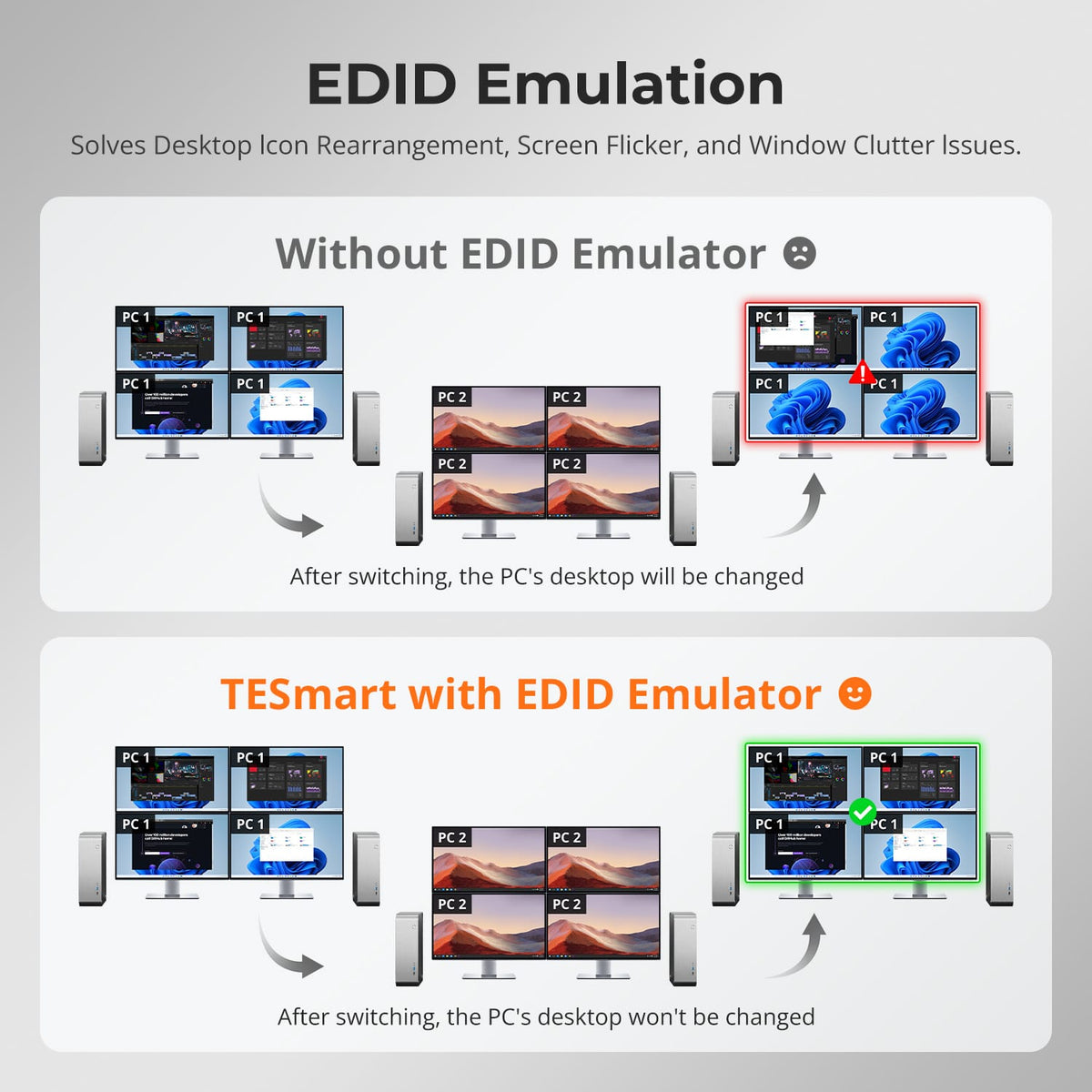
[Features & Connections] What does EDID emulation do?
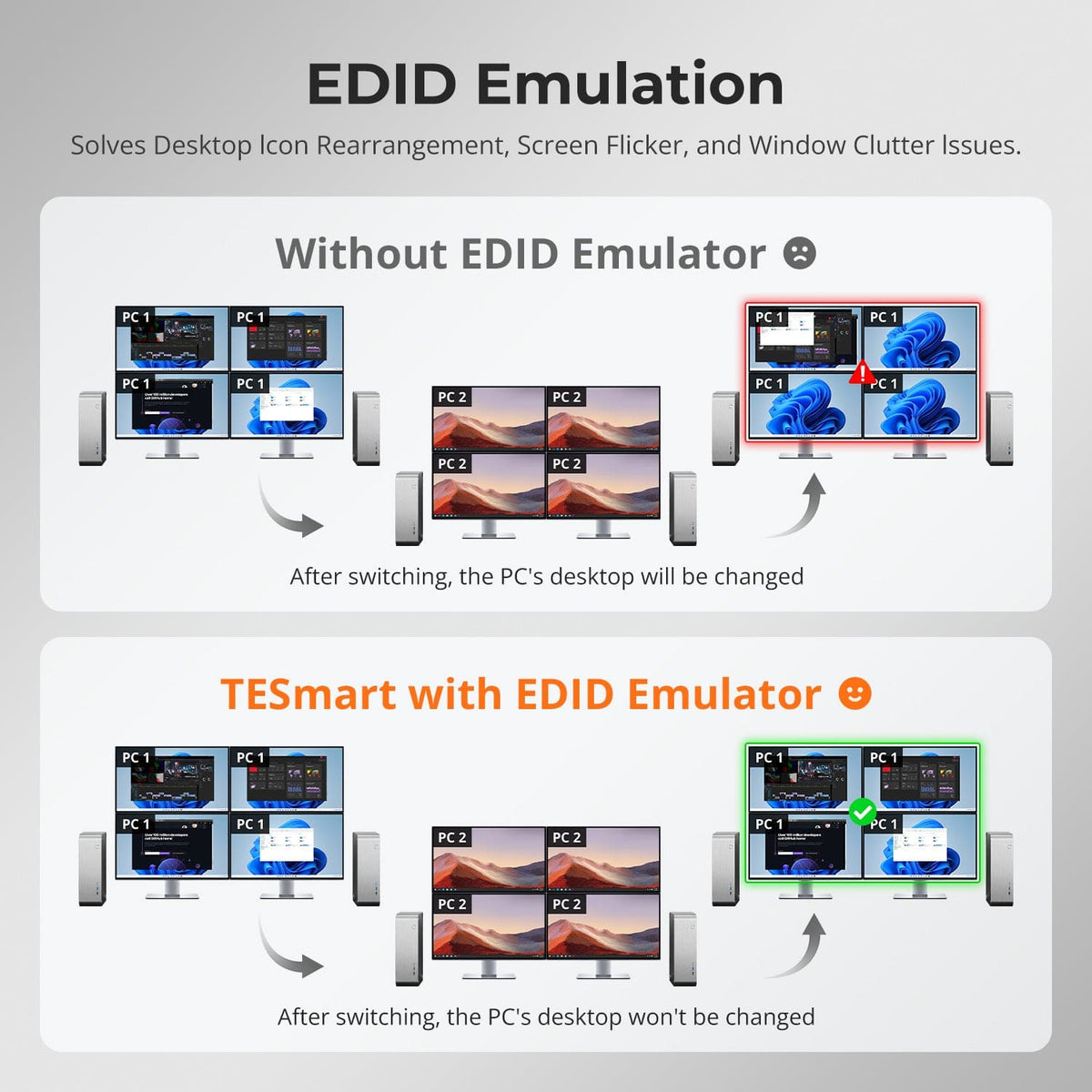
EDID emulation keeps display information available to connected computers, helping preserve window positions and reduce flicker, black screens and desktop rearrangement during switching.
[Features & Connections] What USB functions are available?
Connect compatible peripherals to the shared USB 3.0 ports for data transfer up to 5Gbps. The front USB-A and USB-C ports also support BC 1.2 charging for mobile devices.
[Features & Connections] How does audio work through the 3.5mm port?
Audio and microphone signals travel through the selected computer's USB connection. Choose USB Audio as the playback and recording device on the computer.
[Features & Connections] Can USB and audio stay with one computer while the displays switch?
Yes. Lock USB 3.0 devices and L/R audio independently so they remain assigned to one computer. These locks are released when the KVM is powered off.
[Features & Connections] What does the KVM lock function do?
It turns off all displays, pauses audio, dims the LCD and disables the buttons, remote and hotkeys. Press Lock again and enter the configured numeric password to restore operation; the default password is 1234.
[Setup & Switching] How do I connect PC 1 and PC 2?
For each computer, connect one DisplayPort cable for the MST path, one HDMI connection through the supplied KVM cable for Display A, and the USB connection in the same input group.
[Setup & Switching] How do I connect PC 3 and PC 4?
Connect four HDMI outputs and one USB connection from each computer to its matching input group, then connect all four KVM HDMI outputs to the displays.
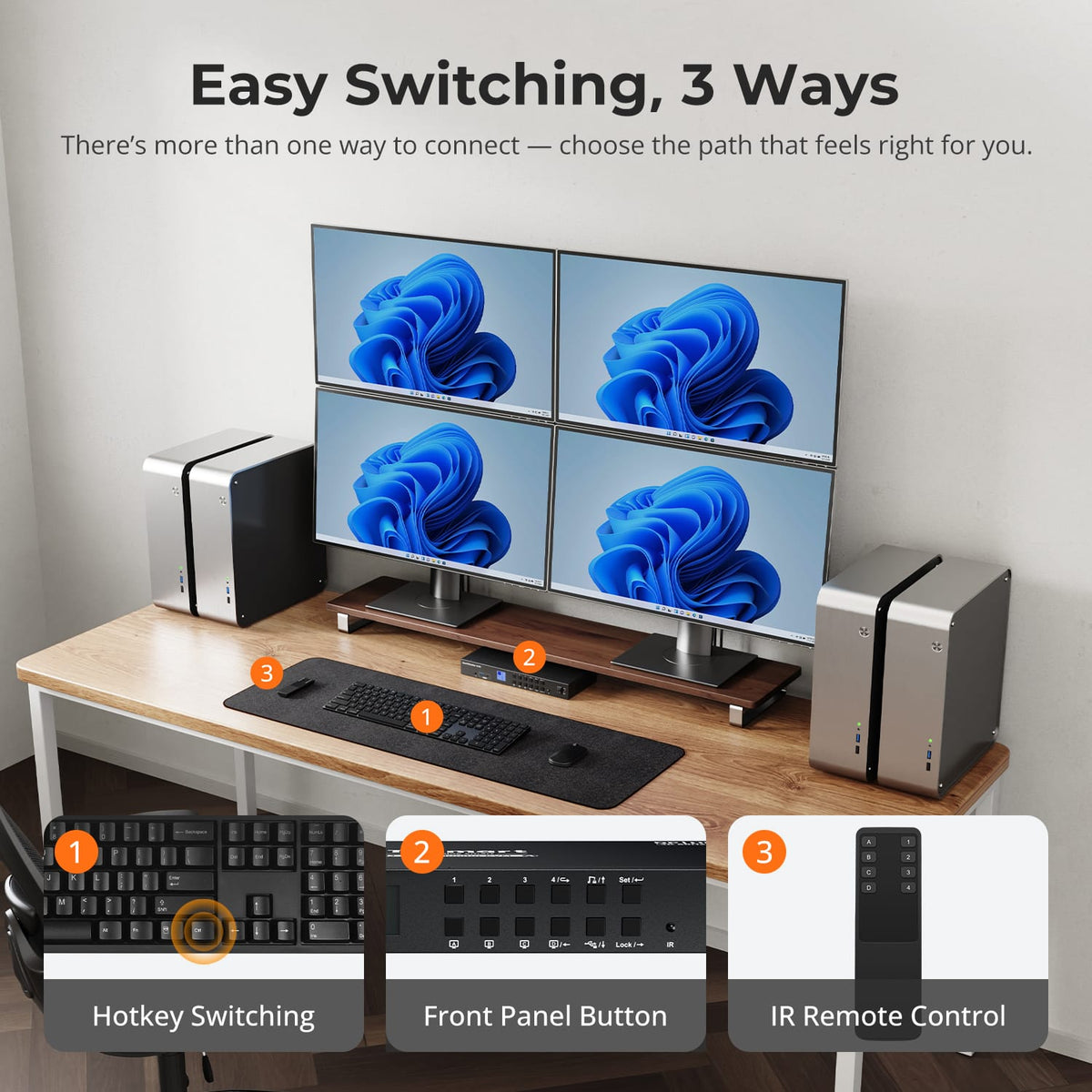
[Setup & Switching] How can I switch computers and displays?
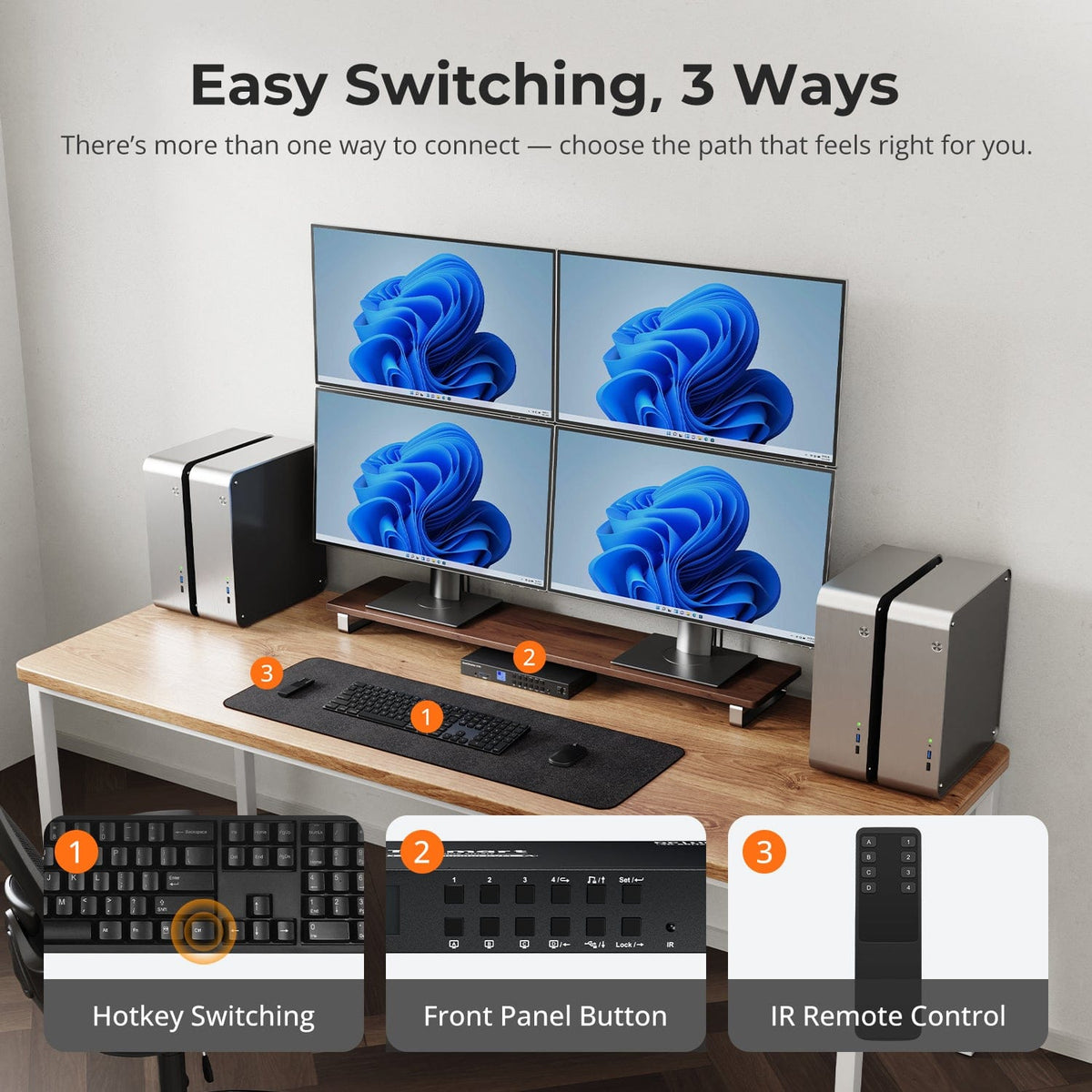
Use the front-panel controls, IR remote or keyboard hotkeys. A full switch moves the display wall to one computer, while mixed-display commands select the source for individual outputs.
[Setup & Switching] Why do Displays B, C and D initially show mirrored images?
The graphics card may default the MST outputs to duplicate mode. Open the computer display settings and change the three displays to extended mode; the source must support DisplayPort 1.2 MST.